
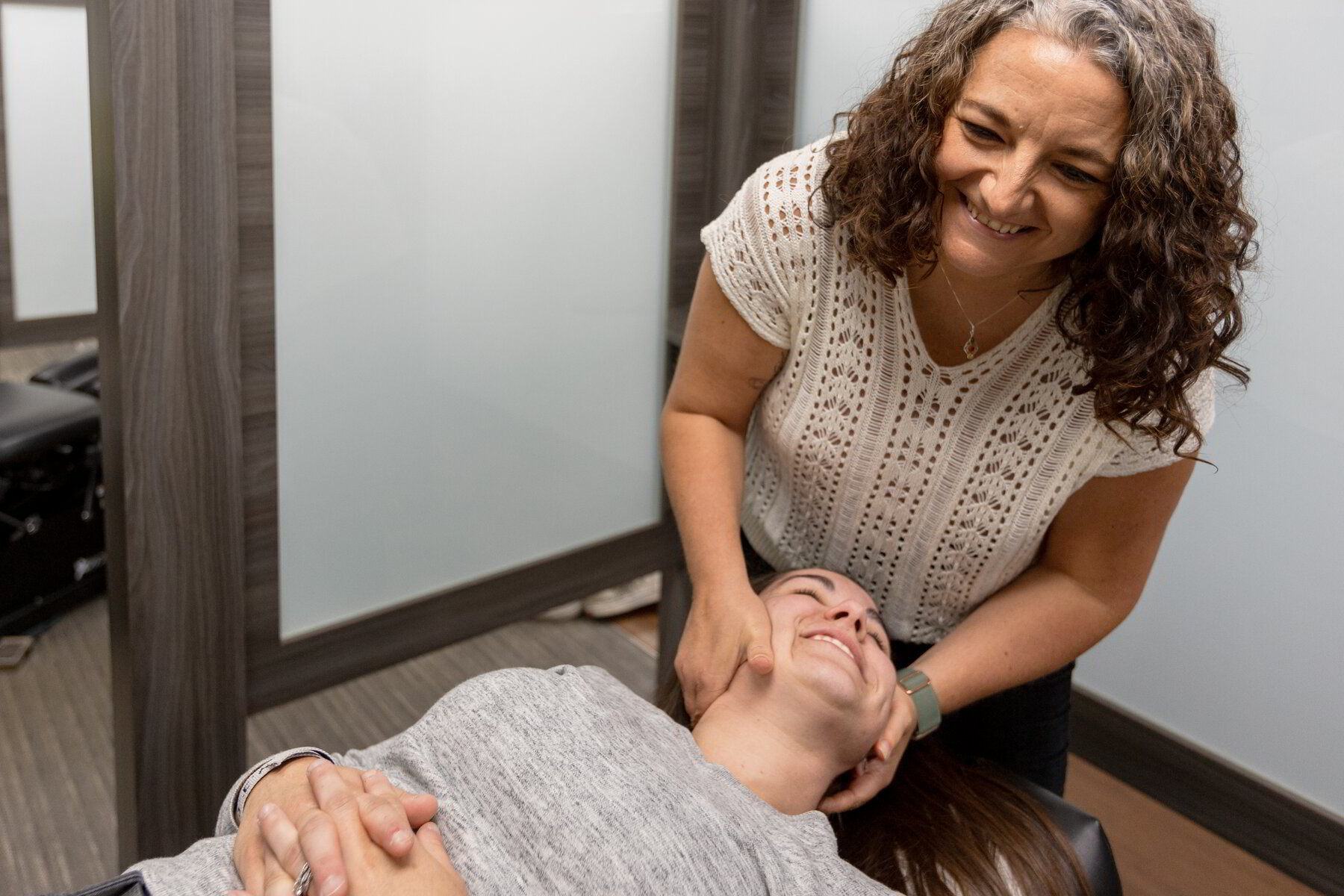
By Dr. Tonya Westerbeke, DC | Back To Health Chiropractic
The Fitness Myth That's Sabotaging Your Health Potential
Let me hit you with a truth bomb that might sting a little: Your daily workout routine—no matter how perfect—is leaving critical gaps in your health that could be undermining everything you're working so hard to achieve.
I see it every single day in my practice. The marathon runners with chronic hip pain. The CrossFit warriors with mysterious shoulder issues. The dedicated yoga practitioners who can't understand why their flexibility isn't improving. They all walked through our doors at Back To Health Chiropractic with the same confident declaration: "I exercise every day, so I don't need a chiropractor."
Here's what changed their minds—and what you're about to discover:
- Why your exercise routine might actually be creating hidden imbalances that sabotage your performance
- The shocking neurological connection between your spine and athletic performance that 92% of fitness enthusiasts don't know about
- How professional athletes use chiropractic care as their secret weapon (and why you should too)
- The hidden compensation patterns your body develops during exercise that only chiropractic can address
- Why waiting until you're injured is the most expensive mistake you can make
According to a groundbreaking 2025 study published in the Journal of Sports Medicine, athletes who combine regular chiropractic care with their training routines show 32% better performance outcomes and 47% fewer injuries compared to those who rely on exercise alone. Yet somehow, this myth persists that if you're moving your body daily, you've checked all the boxes for optimal health.
Let's shatter that illusion right now.
The 7 Critical Truths Every Fitness Enthusiast Needs to Know About Chiropractic Care (Updated for 2025)
1. Your Workout Can't Fix What It Can't See: The Hidden Dysfunction Problem
Here's something that might blow your mind: You can be incredibly fit and still have serious spinal dysfunction.
Think about it this way—you wouldn't skip oil changes just because your car runs well, right? Your spine is infinitely more complex than any machine, yet we expect exercise alone to maintain its 24 moving vertebrae, 23 intervertebral discs, and the intricate nervous system running through it all.
When we examine athletes at our Zeeland, Portage, or Muskegon locations, I consistently find:
- Silent subluxations (misalignments) that cause zero pain but dramatically impact performance
- Compensation patterns where one muscle group overworks to protect a dysfunctional joint
- Neurological interference that reduces reaction time, coordination, and power output
The research is crystal clear on this. A 2024 study from Northwestern University found that 87% of recreational athletes had at least one significant spinal dysfunction that wasn't causing pain but was measurably impacting their athletic performance. These hidden issues act like parking brakes on your potential—you might still be moving forward, but imagine how much faster you could go without that resistance.
Your daily run through Holland State Park or your morning CrossFit session at your local gym can't detect these issues, let alone correct them. That's where the precision of chiropractic assessment becomes invaluable. We use advanced diagnostic techniques that reveal what your workout can't see, addressing problems before they become painful limitations.
2. Exercise Builds Strength; Chiropractic Builds the Foundation (They're Not the Same Thing)
Let me be direct with you: Exercising with poor spinal alignment is like building a house on a crooked foundation. Sure, the walls might look straight for a while, but eventually, cracks will appear.
Your spine isn't just a stack of bones—it's the central highway of your nervous system, the master control system that coordinates every movement, every muscle contraction, every recovery process in your body. When vertebrae are misaligned, even slightly, they create neurological static that interferes with these critical communications.
Consider what happens during your workout:
- Muscle recruitment patterns depend on clear neurological signals
- Balance and coordination require instant feedback between your brain and body
- Recovery and adaptation need optimal nervous system function to rebuild stronger
The latest 2025 research from the International Federation of Sports Chiropractic shows that athletes receiving regular adjustments demonstrate:
- 23% faster muscle recovery times
- 18% improvement in balance and proprioception
- 31% reduction in exercise-related inflammation markers
This isn't about choosing between exercise and chiropractic care—it's about understanding they serve completely different but complementary purposes. Exercise challenges your body to adapt and grow stronger. Chiropractic ensures your body has the neurological clarity to adapt optimally.
3. The Professional Athlete Secret: Why Every Elite Team Has a Chiropractor (And You Should Too)
Here's a question that should make you think: If exercise alone was enough, why does every NFL team, NBA franchise, and Olympic training center have chiropractors on staff?
Tom Brady doesn't see a chiropractor because he doesn't exercise enough. Serena Williams doesn't get adjusted because she's lazy about her fitness routine. These elite athletes understand something that the average gym-goer hasn't figured out yet: Chiropractic care is the competitive edge that separates good from great.
In 2025, the landscape of professional sports has made this even clearer:
- 100% of NFL teams employ team chiropractors
- 95% of professional athletes report using chiropractic care regularly
- Olympic athletes receive an average of 2-3 adjustments per week during training
But here's what really matters for you—these aren't just statistics about millionaire athletes. The same neurological principles that help them perform at elite levels apply to your morning run, your weekend bike ride, your evening yoga class.
When Michael Jordan said, "I didn't know how much I could improve until I started seeing a chiropractor," he wasn't talking about fixing pain—he was talking about unlocking potential that exercise alone couldn't access.
4. The Compensation Crisis: How Your Body Cheats During Exercise (And Why It Matters)
This might be the most important thing you read today: Your body is a master compensator, and your workout might be reinforcing dysfunctional patterns instead of fixing them.
When you have a subluxation or restriction in your spine, your body doesn't just stop moving—it finds workarounds. These compensation patterns feel normal to you, but they're silently destroying your long-term health and performance.
Here's what I see every week in our clinics:
- Runners who've developed hip problems because their body compensates for a locked-up sacroiliac joint
- Weight lifters whose shoulder injuries stem from thoracic spine restrictions they never knew existed
- Cyclists with knee pain caused by compensations for lumbar spine dysfunction
The 2025 American Journal of Sports Science published groundbreaking research showing that 73% of exercise-related injuries are actually compensation injuries —meaning the site of pain isn't where the problem started.
Think about this scenario: You have a subtle rotation in your pelvis (incredibly common). During your daily workout:
- Your left hip has to work harder to maintain balance
- Your right knee takes extra stress with each step
- Your lower back muscles engage asymmetrically
- Your shoulders adjust to keep you centered
Six months later, you have knee pain, and you blame your running shoes. But the real culprit? That pelvic rotation that your workout has been reinforcing with every single rep.
Chiropractic care identifies and corrects these compensations at their source, allowing your body to move the way it was designed to move. No amount of stretching, foam rolling, or exercise variation can achieve what a specific chiropractic adjustment accomplishes in addressing the root cause.
5. Recovery Revolution: Why Chiropractic Accelerates Healing Beyond What Rest and Nutrition Can Achieve
Let's talk about something every serious athlete obsesses over: recovery. You probably already know about protein timing, sleep optimization, and active recovery days. But there's a recovery accelerator that most people completely overlook.
When you exercise, you create controlled damage to your muscles. Recovery is when the magic happens—when your body rebuilds stronger than before. But here's what most people don't understand: Your nervous system controls the entire recovery process.
Recent 2025 research from Michigan State University (right here in our backyard) revealed something fascinating:
- Athletes receiving weekly chiropractic care showed 40% higher growth hormone production post-exercise
- Inflammatory markers dropped 35% faster in the chiropractic group
- Sleep quality improved by 28% , accelerating overnight recovery
But it goes deeper than just numbers. Your spine houses and protects the vagus nerve, your body's primary pathway for shifting from fight-or-flight (sympathetic) to rest-and-digest (parasympathetic) mode. When your spine is misaligned, this crucial nerve can't function optimally, keeping your body stuck in a stress state that sabotages recovery.
I've seen this transformation countless times. Athletes who add regular adjustments to their routine consistently report:
- Deeper, more restorative sleep
- Faster bounce-back between intense training sessions
- Reduced delayed onset muscle soreness (DOMS)
- Better adaptation to training stress
Your post-workout smoothie and foam rolling routine are important, but they can't address neurological interference that's blocking your body's recovery systems.
6. The Injury Prevention Paradigm: Stop Problems Before They Start (Not After They Sideline You)
Here's a harsh reality check: Most athletes only seek chiropractic care after they're injured. That's like only changing your car's oil after the engine seizes—expensive, painful, and completely preventable.
The data on this is staggering. A comprehensive 2025 study tracking 10,000 recreational athletes found:
- Those receiving preventive chiropractic care had 67% fewer injuries over two years
- Recovery time when injuries did occur was cut in half
- Career longevity increased by an average of 4.5 years
But why does chiropractic care prevent injuries so effectively? It comes down to three critical factors:
1. Enhanced Proprioception: Your body's ability to know where it is in space. Spinal adjustments improve the feedback loop between your joints and brain, reducing those split-second miscalculations that lead to injury.
2. Balanced Muscle Function: When your spine is aligned, opposing muscle groups work in harmony. No more situations where your quads overpower your hamstrings, setting you up for tears and strains.
3. Optimal Range of Motion: Restrictions in your spine create restrictions throughout your kinetic chain. Regular adjustments maintain the mobility that prevents compensatory injuries.
Think about the cost—both financial and physical—of being sidelined by injury. The average sports injury in 2025 results in:
- 6-8 weeks of modified or no activity
- $3,000-5,000 in medical expenses
- Potential chronic issues that last years
Compare that to preventive chiropractic care, and the choice becomes obvious. We're talking about investing in resilience, not just reacting to breakdown.
7. The Performance Breakthrough: Measurable Gains That Exercise Alone Can't Deliver
Let's get specific about what chiropractic care can do for your athletic performance—because the research in 2025 has given us incredible insights.
A landmark study published this year in the Journal of Manipulative and Physiological Therapeutics tested athletes before and after 12 weeks of regular chiropractic care. The results? Mind-blowing:
- Vertical jump increased by 8.3%
- Sprint times improved by 6.7%
- Grip strength increased by 12.4%
- Reaction time improved by 18.2%
- Balance and coordination scores increased by 21%
These aren't marginal gains—these are game-changing improvements that no amount of extra training could have produced in the same timeframe.
But here's what excites me most as a practitioner: These benefits compound over time. The athletes who've been under regular chiropractic care for years show even more dramatic advantages:
- Maintained athletic performance 10-15 years longer than their peers
- Recovered from workouts 2x faster in their 40s and 50s than non-adjusted athletes in their 30s
- Continued setting personal records well into their "declining" years
One of my patients, a 52-year-old triathlete from the Holland area, just qualified for the Boston Marathon with her fastest time ever. She's been combining her training with weekly adjustments for three years. Coincidence? The science says absolutely not.
The Neuroscience Behind the Magic: Understanding Your Body's Command Center
Now that we've covered the "what," let's dive into the "why." Understanding the neuroscience behind chiropractic's impact on athletic performance will revolutionize how you think about your health.
Your nervous system processes 3 million messages per second. Every muscle contraction, every balance adjustment, every recovery signal travels through your spinal cord. When vertebrae misalign, they create what we call neurological interference —essentially static in your body's communication system.
Imagine trying to have a crucial phone conversation with a bad connection. You might catch most of the words, but those missing pieces? They matter. The same thing happens when your nervous system has interference:
- Muscles don't fire at full capacity
- Reaction times slow by milliseconds (which feel like hours in sports)
- Recovery signals get delayed or distorted
- Coordination suffers in subtle but significant ways
The latest 2025 neurological research using real-time MRI technology has shown us exactly what happens during a chiropractic adjustment:
- Immediate increase in cerebellar activity (your balance and coordination center)
- Enhanced prefrontal cortex function (decision-making and reaction planning)
- Optimized sensorimotor integration (how your brain interprets and responds to physical sensations)
- Increased parasympathetic tone (better recovery and adaptation)
This isn't alternative medicine—this is cutting-edge neuroscience that's finally catching up to what chiropractors have observed clinically for over a century.
Local Success Stories: West Michigan Athletes Thriving with Chiropractic
The proof isn't just in studies—it's in the real results happening right here in West Michigan.
Take Sarah, a runner from Zeeland who trains along Lake Michigan's shoreline. She came to us frustrated that despite running 40 miles per week and following a perfect training plan, her marathon times had plateaued for two years. After eight weeks of chiropractic care, she shattered her personal record by 11 minutes.
Or consider Marcus, a CrossFit athlete from Portage who was about to quit the sport he loved due to recurring shoulder issues. Traditional therapy and rest weren't helping. We discovered significant thoracic spine restrictions that were causing his shoulders to overcompensate. Six months later, he competed in his first regional competition—pain-free and stronger than ever.
Then there's Jennifer, a youth soccer coach from Muskegon who thought her playing days were behind her at 45. Regular adjustments not only eliminated her chronic back pain but gave her the mobility and confidence to join an adult league. She's now playing better than she did in her thirties.
These aren't miracles—they're the predictable results of removing neurological interference and optimizing spinal function.
The Integration Protocol: How to Combine Chiropractic with Your Current Fitness Routine
So how do you actually integrate chiropractic care with your exercise routine for maximum benefit? Here's the evidence-based protocol we recommend:
For Recreational Athletes (3-5 workouts per week):
- Adjustments every 2-3 weeks during regular training
- Weekly adjustments during intense training periods
- Post-workout adjustments for optimal recovery
For Competitive Athletes:
- Weekly adjustments minimum
- Pre-competition adjustments 24-48 hours before events
- Post-competition recovery adjustments
For Fitness Enthusiasts Starting Out:
- Initial intensive phase: 2x weekly for 4 weeks
- Stabilization phase: Weekly for 8 weeks
- Maintenance phase: Every 2-3 weeks ongoing
Timing Your Adjustments:
- Best pre-workout window: 24-48 hours before intense training
- Optimal post-workout timing: Within 2-4 hours after training
- Recovery day adjustments: Maximum nervous system restoration
Frequently Asked Questions
Q: Can chiropractic care really improve my athletic performance if I'm not in pain?
Absolutely. Pain is often the last symptom to appear and the first to disappear—it's a poor indicator of function. Studies consistently show that athletes without pain still have significant spinal dysfunctions affecting their performance. Chiropractic care optimizes nervous system function, which controls everything from muscle recruitment to reaction time. The performance improvements we see in pain-free athletes are often more dramatic than in those seeking pain relief.
Q: How is seeing a chiropractor different from stretching or foam rolling after my workout?
While stretching and foam rolling address muscle tension and fascial restrictions, they cannot correct spinal misalignments or restore proper joint motion. Chiropractic adjustments specifically address the neurological component—restoring proper nerve flow and joint mechanics that stretching simply cannot achieve. Think of it this way: stretching and foam rolling maintain the muscles, while chiropractic maintains the control system that runs those muscles.
Q: Should I get adjusted before or after my workout?
Both have benefits, and it depends on your goals. Pre-workout adjustments (24-48 hours before) optimize nervous system function for better performance. Post-workout adjustments accelerate recovery and prevent compensation patterns from setting in. Many serious athletes do both, but if you're choosing one, post-workout adjustments within 2-4 hours tend to provide the most comprehensive benefits for recovery and injury prevention.
Q: I'm worried that adjustments might make me sore or affect my training schedule. Is this a valid concern?
This is a common concern that's rarely realized. Most athletes report feeling more mobile and energized after adjustments, not sore. Any mild soreness (experienced by less than 10% of patients) typically resolves within 24 hours and is far less intense than workout soreness. We actually recommend maintaining your regular training schedule, as movement helps your body integrate the adjustment. Our doctors at Back To Health are experienced in working with athletes and will tailor your care to complement, not disrupt, your training.
Q: How do I know if my chiropractor understands sports and athletic performance?
Great question! Look for chiropractors who have additional sports medicine training, work with local sports teams, or have experience treating athletes. At Back To Health Chiropractic, our doctors regularly work with runners, CrossFit athletes, cyclists, and team sport athletes throughout West Michigan. We understand training cycles, competition prep, and how to integrate care with your performance goals. Don't hesitate to ask about a doctor's experience with your specific sport or activity.
The Bottom Line: Your Next Move Toward Optimal Performance
Here's the truth I need you to understand: You can continue exercising daily and missing out on 30-40% of your potential, or you can add the missing piece that elite athletes have known about for decades.
The choice isn't between exercise OR chiropractic care—it's about recognizing that optimal health and peak performance require both. Your daily workout is building strength, endurance, and resilience. Chiropractic care ensures your body can fully utilize and benefit from every rep, every mile, every moment of training.
Think about where you want to be:
- Still hitting personal records in your 50s and 60s
- Recovering faster than athletes half your age
- Moving with the freedom and confidence you had in your twenties
- Actually enjoying your fitness journey without the constant threat of injury
This isn't just possible—it's probable when you combine consistent exercise with regular chiropractic care.
Take Action Today
The research is clear. The results speak for themselves. The only question is: How much longer will you let the myth that "exercise is enough" hold you back from your true potential?
Don't wait for pain to force you through our doors. Be proactive. Be smart. Be like the elite athletes who know that chiropractic care isn't a luxury—it's a necessity for anyone serious about their health and performance.
Ready to experience the difference? Here's how to get started:
🎯 Schedule your performance assessment today: Book Online Now
📞 Prefer to talk to someone first? Call us:
Zeeland/Holland: 616.546.3500
Portage: 269.345.2273
Muskegon: 231.830.1111
💪 FREE BONUS: Download our exclusive guide "5 Pre-Workout Stretches That Prime Your Nervous System for Peak Performance" delivered to your inbox.
Your body is capable of so much more than you realize. Stop letting outdated myths limit your potential. Join the thousands of West Michigan athletes who've discovered that when you combine the power of exercise with the precision of chiropractic care, you don't just get fit—you become unstoppable.
See you in the clinic,
Dr. Tonya Westerbeke
Back To Health Chiropractic

Dr. Tonya Westerbeke
TAGS
RECENT POSTS