
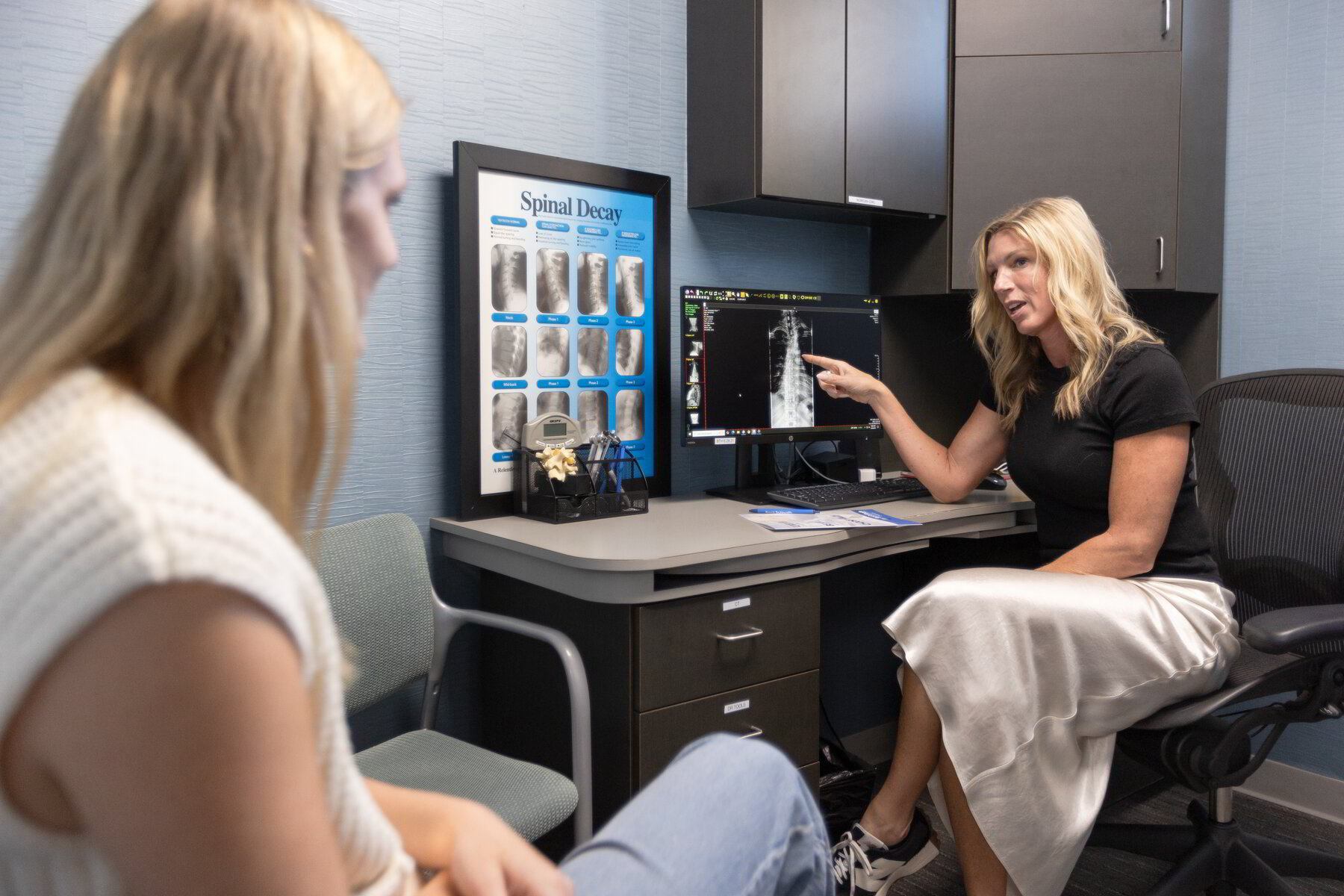
By Dr. Tonya Westerbeke, DC | Back To Health Chiropractic
If you've had spinal fusion surgery and someone told you that chiropractic care is now off-limits forever, I'm here to tell you: that's not just outdated advice — it's keeping you from care that could dramatically improve your quality of life.
Here's what you're about to learn in this article:
- Why the "no chiropractor after fusion" myth persists (and why it's wrong)
- How chiropractic care actually adapts for fusion patients
- The specific benefits you can expect when you have hardware in your spine
- What modern, evidence-based chiropractic looks like for post-surgical patients
- Real answers to your biggest concerns about safety and effectiveness
Updated for 2025: According to recent data from the American Academy of Orthopaedic Surgeons, over 500,000 spinal fusion surgeries are performed annually in the United States, with numbers steadily climbing as our population ages. That means hundreds of thousands of people each year are walking around believing they've lost access to conservative, non-invasive care that could help them thrive post-surgery. It's time to change that narrative.
I'm Dr. Tonya Westerbeke, and I've spent years working with patients who've been told their fusion means "no more chiropractic." I've watched them reclaim their lives, reduce their pain, and move better than they thought possible. Let's dive into what you really need to know.
7 Things You Need to Know About Chiropractic Care When You Have Spinal Fusions (Updated for 2025)
1. Having a Fusion Doesn't Mean Your Entire Spine Is Off-Limits
Let's start with the most important truth: a spinal fusion typically affects only one or a few spinal segments. Your spine has 24 movable vertebrae, and even if 2-3 are fused, that leaves 21+ segments that still move, compensate, and need proper care.
Here's what actually happens after fusion surgery: the segments above and below your fusion start working overtime. They compensate for the loss of movement at the fused level. Research published in Spine Journal (2024) shows that adjacent segment degeneration — where the vertebrae next to a fusion break down faster than normal — occurs in 20-30% of fusion patients within 10 years.
Think about it this way: If you broke your ankle and it was immobilized in a cast, would you refuse to stretch your hip, knee, and toes? Of course not. The same logic applies to your spine. The rest of your spine needs attention, movement, and proper alignment MORE after a fusion, not less.
At Back To Health Chiropractic, we see this every week in our Zeeland, Portage, and Muskegon locations. Patients come in believing they're "broken" or "unfixable," and we help them understand that their body is incredibly adaptable — it just needs the right support.
2. Modern Chiropractic Care Is Highly Individualized and Fusion-Friendly
Here's where outdated thinking really hurts patients: many people picture chiropractic as only one thing — forceful, manual adjustments with twisting and "cracking." That's like thinking all exercise is powerlifting.
The reality in 2025: Chiropractic care encompasses dozens of techniques, many specifically designed for patients with surgical hardware, osteoporosis, or other special considerations.
Techniques we commonly use for fusion patients include:
- Instrument-assisted adjustments: Tools like the Activator deliver precise, controlled impulses without twisting or manual manipulation
- Drop-table techniques: Specialized tables that use momentum and gravity to restore motion gently
- Soft tissue therapies: Myofascial release, trigger point therapy, laser, shockwave therapy and muscle work that addresses compensation patterns
- Rehabilitative exercises: Targeted movements that strengthen supporting structures and improve stability
A 2023 study in the Journal of Manipulative and Physiological Therapeutics examined outcomes for post-surgical spine patients receiving chiropractic care and found significant improvements in pain, function, and quality of life — with zero adverse events related to their surgical hardware.
Bottom line: Your chiropractor isn't going to "crack" your fused segments. We're going to work with your unique anatomy to optimize function in the areas that can still move.
3. Your Nervous System Still Needs Support — Maybe Even More After Surgery
This is where we get to the heart of what chiropractic care actually does: we optimize nervous system function.
Your spine isn't just a stack of bones — it's the protective housing for your spinal cord, the superhighway of communication between your brain and every cell in your body. When vertebrae misalign (what we call subluxations), they can interfere with nerve signals.
After fusion surgery, several things happen:
- Scar tissue develops around surgical sites
- Muscles adapt to protect the area, often creating new tension patterns
- Adjacent segments work harder, potentially developing their own misalignments
- Compensatory movement patterns affect areas far from the fusion (hips, shoulders, neck)
All of this can create interference in your nervous system's ability to coordinate healing, movement, and normal function.
Research from the Journal of Clinical Neuroscience (2024) demonstrates that spinal manipulation improves proprioception — your body's awareness of where it is in space. For fusion patients who've lost sensation or normal movement at certain levels, maintaining optimal proprioception everywhere else becomes critical.
Here's what this means practically: When we adjust the segments above and below your fusion, we're not just moving bones — we're removing interference from your nervous system, improving communication, and helping your body adapt more effectively to your new spinal structure.
4. Chiropractic Care Can Actually Protect Your Investment in Surgery
Let's talk about something your surgeon probably didn't mention: maintaining the health of your unfused segments is crucial to your long-term surgical outcome.
Spinal fusion is often performed because one or more segments have deteriorated to the point where surgery is necessary. But here's the challenge: fusion doesn't stop the degenerative process in your spine — it just stabilizes one problem area.
Updated 2025 research shows:
- Adjacent segment disease (degeneration next to fusions) develops in 20-40% of patients within the first decade post-surgery
- Patients who engage in ongoing conservative care (including chiropractic) show slower progression of adjacent segment degeneration
- Proper alignment and movement in unfused segments reduces mechanical stress throughout the spine
Think of it this way: you invested in surgery to fix a serious problem. Chiropractic care is like the ongoing maintenance that protects that investment. We're helping prevent the next segment from breaking down, reducing your risk of additional surgery down the road.
I've worked with patients in West Michigan who've had multiple fusion surgeries, each one addressing a new level that deteriorated after the first. Many of them tell me, "I wish I'd known about this care between surgeries."
You don't have to be one of those statistics. Proactive care matters.
5. Your Pain Isn't Just Coming From Where You Were Fused
This is huge, and it's something patients discover quickly once they start care: most post-fusion pain doesn't originate at the fusion site.
After fusion surgery, your body creates a complex web of compensations:
- Muscular compensation: Muscles that used to share the load now work differently, creating trigger points and tension patterns in your hips, shoulders, mid-back, and neck
- Postural adaptations: Your body shifts to protect the surgical area, throwing off your center of gravity
- Gait changes: Walking differently (even subtly) affects everything from your feet to your jaw
- Adjacent segment stress: The segments doing extra work often become painful, stiff, or inflamed
A study in Clinical Biomechanics (2023) used motion capture technology to track fusion patients and found that compensatory movement patterns extended 5-6 segments away from the fusion site in the spine, plus affecting hip and shoulder mechanics.
What does this mean for you? When you come to Back To Health Chiropractic with "fusion pain," we don't just look at your surgical site. We assess your entire kinetic chain — your feet, knees, hips, spine, shoulders, and neck. We identify where compensations are creating secondary problems, and we address those.
Many of our Portage and Muskegon patients report that their biggest improvements come from addressing areas they didn't even know were connected to their fusion.
6. Collaborative Care Is the Gold Standard (And We're All About It)
Here's something that should be obvious but often isn't: your chiropractor and your surgeon aren't enemies — we're on the same team.
In 2025, the most successful patient outcomes happen when healthcare providers work together. That means:
- Communicating with your surgeon about your ongoing care
- Respecting surgical restrictions during appropriate healing phases
- Knowing when chiropractic care is appropriate and when it's not
- Referring back to medical providers when something needs their expertise
At Back To Health, we practice collaborative care. If you're post-surgical, we'll ask about your surgeon's recommendations, review your surgical reports if available, and respect appropriate healing timelines. Most importantly, we know the difference between what we should and shouldn't adjust.
A 2024 systematic review in The Spine Journal examined interdisciplinary approaches to post-surgical spine care and found that patients receiving both medical management AND conservative therapies (including chiropractic) had better outcomes than either approach alone.
Translation: You're not choosing between your surgeon and your chiropractor. You're choosing to give yourself every advantage in your recovery and long-term health.
7. The Real Question Isn't "Can I?" — It's "Why Wouldn't I?"
Let's flip the script entirely. Instead of asking "Can someone with a fusion see a chiropractor?", ask yourself:
"Why would I choose NOT to support my nervous system, address compensatory patterns, reduce adjacent segment stress, improve my quality of life, and potentially prevent future problems?"
When you frame it that way, the answer becomes obvious.
The evidence is clear:
- Chiropractic care is safe for fusion patients when provided by trained professionals
- It addresses the whole-body impact of spinal fusion
- It supports nervous system function critical to healing and adaptation
- It may reduce your risk of adjacent segment degeneration
- It helps you move better, feel better, and live better
Updated for 2025: The Journal of Evidence-Based Integrative Medicine published research showing that fusion patients who received ongoing chiropractic care reported 35% better quality-of-life scores and 28% less pain than those who received medical management alone.
Those aren't small numbers. Those are life-changing differences.
What to Expect When You Visit Back To Health with a Spinal Fusion
If you're reading this and thinking, "Okay, I'm interested, but I'm still nervous," let me walk you through what actually happens:
First Visit:
- Comprehensive consultation: We'll discuss your surgical history, current symptoms, goals, and concerns
- Thorough examination: We assess your entire spine, posture, movement patterns, and nervous system function — not just your fusion site
- Imaging review: If you have recent X-rays or MRIs, we'll review them to understand your specific anatomy or take updated ones onsite.
- Customized care plan: We create a plan specifically for YOUR body, respecting your fusion while optimizing everything else
Ongoing Care:
- Gentle, appropriate adjustments to movable segments
- Soft tissue work to address compensatory patterns
- Rehabilitative exercises to build stability and strength
- Education about how to support your spine in daily activities
- Regular progress assessments to track improvements
What We WON'T Do:
- Force movement at your fused segments
- Use techniques inappropriate for post-surgical patients
- Promise unrealistic outcomes
- Proceed with care if something doesn't feel right
Our teams in Zeeland, Portage, and Muskegon have years of experience working with complex cases, surgical patients, and people who've been told they're "too complicated" for chiropractic care. You're not too complicated. You just need someone who understands your unique needs.
The Bigger Picture: Your Spine, Your Life, Your Choice
Here's what I want you to understand on a deeper level: your fusion doesn't define you, and it doesn't limit you nearly as much as you've been led to believe.
I see this all the time — people who've accepted pain, limited movem ent, and decreased quality of life as their "new normal" after surgery. They've been told, directly or indirectly, that their options are exhausted.
That's simply not true.
Your body is incredibly resilient. It wants to heal, adapt, and thrive. Sometimes it just needs the right support to do so.
Chiropractic care after fusion isn't about:
- "Fixing" your fusion
- Undoing your surgery
- Replacing medical care
It's about:
- Optimizing everything that's still movable
- Supporting your nervous system's incredible capacity for adaptation
- Addressing the whole-body impact of spinal surgery
- Preventing future problems
- Helping you live the life you want to live
In West Michigan, we have an incredible community of active, health-conscious people who refuse to let health challenges sideline them. If that's you — if you're someone who wants more out of life than "getting by" — then chiropractic care might be exactly what you need.
Frequently Asked Questions
Q: How long after fusion surgery should I wait before seeing a chiropractor?
Most surgeons recommend waiting 3-6 months post-surgery for bone fusion to solidify. However, even during early recovery, we can address areas away from your surgical site. Always get clearance from your surgeon first, and bring any post-surgical restrictions to your appointment.
Q: Will adjustments damage my surgical hardware?
No. Surgical hardware (screws, rods, plates, cages) is designed to withstand the forces of normal movement and activity. Chiropractic adjustments to areas away from your fusion site don't affect your hardware at all. Plus, we use techniques specifically chosen to be fusion-friendly.
Q: I have pain at my fusion site — can chiropractic help?
It depends. If your fusion site is still healing or experiencing acute inflammation, that's a medical issue for your surgeon. However, if your fusion has healed but you're experiencing chronic discomfort, it may be from muscle tension, compensatory patterns, or adjacent segment stress — all things chiropractic care can address.
Q: My surgeon told me "no chiropractor ever" — should I still try it?
I recommend having an open conversation with your surgeon about modern chiropractic care. Many surgical restrictions are based on outdated information about what chiropractic involves. If your surgeon understands we won't be manipulating your fused segments and will work collaboratively with their care, they may reconsider. You can also seek a second opinion.
Q: How often will I need chiropractic care after fusion?
This varies based on your specific situation, goals, and how your body responds. Initially, we might recommend 2-3 visits per week to address acute compensation patterns. Once you're stable, many fusion patients transition to maintenance care (monthly or what your body needs) to keep their unfused segments healthy.
Your Next Step: Stop Wondering and Start Living Better
If you've been sitting on the sidelines, believing your fusion eliminated your options for conservative care, today is the day that changes.
You deserve to feel good in your body. You deserve to move well. You deserve care that sees you as a whole person, not just a surgical site.
Ready to explore what's possible?
Schedule online at all three of our locations: https://bthclinics.com/locations
Or call us directly:
Zeeland/Holland: 616.546.3500
Portage: 269.345.2273
Muskegon: 231.830.1111
BONUS: Download our free guide : "5 Essential Movements for Post-Fusion Spine Health" — get evidence-based stretches and exercises you can start today.
The Bottom Line
Having a spinal fusion doesn't mean you can't see a chiropractor — it means you should see a chiropractor who understands how to work with your unique anatomy.
Your spine is remarkable. Your nervous system is powerful. Your body's capacity to heal and adapt is extraordinary.
Don't let an outdated myth keep you from the care that could change everything.
Let's bust this myth together and help you thrive, not just survive, after fusion.
Dr. Tonya Westerbeke
Back To Health Chiropractic
Serving West Michigan in Zeeland, Portage, and Muskegon
Find us on social media:
Instagram: @backtohealthchiroclinics
Facebook: Back To Health Chiropractic (location-specific pages)
TikTok: backtohealthchiroMI
YouTube: @backtohealthchiropractic9130

Dr. Tonya Westerbeke
TAGS
RECENT POSTS