By Dr. Tonya Westerbeke , DC | Back To Health Chiropractic
Introduction: The Myth That's Keeping You From Relief
Let me guess how this conversation went down: You mentioned chronic pain, subluxations, or nervous system issues to your doctor. Maybe you brought up chiropractic care. And the second you said "Ehlers-Danlos Syndrome," the door slammed shut.
"Oh no, chiropractic is way too risky for you."
Here's what I need you to know right up front: That blanket statement isn't entirely accurate — and it's keeping thousands of people with EDS from getting care that could genuinely change their lives.
I'm Dr. Tonya Westerbeke, and I've been in practice long enough to know that the conversation around Ehlers-Danlos Syndrome and chiropractic care is nuanced, evolving, and frankly, deserves better than a one-size-fits-all "no." As of 2025, we have more research, better techniques, and a growing community of chiropractors who understand how to work safely and effectively with hypermobile patients.
Here's what you'll learn in this post:
- Why the traditional chiropractic "crack" isn't your only option (and why it might not be the right one for EDS)
- What current research actually says about manual therapy and hypermobility disorders
- How specialized, EDS-informed chiropractic care works differently
- The nervous system connection that makes chiropractic uniquely valuable for EDS patients
- Exactly what to look for (and what to run from) when choosing a chiropractor
- Real protocols that prioritize your safety without compromising results
According to the Ehlers-Danlos Society, diagnoses of EDS have increased significantly over the past decade, with improved awareness among medical professionals leading to earlier identification. In 2025, we're seeing more collaboration between rheumatologists, physical therapists, and chiropractors who understand that connective tissue disorders require specialized — not eliminated — approaches to care.
You deserve to make an informed decision. Let's dig in.
1. Understanding EDS: Why Your Concerns Are 100% Valid (But Not the End of the Story)
Before we talk about what's possible, let's validate what's real.
Ehlers-Danlos Syndrome is a group of genetic connective tissue disorders that affect collagen production — the protein that gives structure to your skin, joints, blood vessels, and organs. The most common type, hypermobile EDS (hEDS), is characterized by:
- Joint hypermobility (your joints move beyond normal range)
- Chronic pain and fatigue
- Frequent subluxations and dislocations
- Skin that's stretchy and fragile
- Slow wound healing
- Digestive issues and dysautonomia
Here's why doctors get nervous about chiropractic care for EDS patients: Traditional high-velocity, low-amplitude (HVLA) adjustments — the classic "crack" you hear — involve quick, forceful movements. For someone with already-unstable joints and fragile connective tissue, this approach carries legitimate risks:
- Joint subluxation or dislocation
- Ligament overstretching
- Increased instability over time
- Vascular complications (particularly in vascular EDS)
And here's the thing: those concerns are valid. I'm not here to minimize the real risks or pretend every chiropractor is trained to work with hypermobility disorders. Some aren't. And yes, the wrong approach can absolutely make things worse.
But here's where the conversation needs to shift: High-force adjustments aren't the only tool in the chiropractic toolbox. Not even close.
In 2025, modern chiropractic care encompasses dozens of techniques — many specifically designed for patients who need gentle, precise, nervous-system-focused interventions. The assumption that all chiropractic care is contraindicated for EDS is like saying all exercise is dangerous for hypermobility. It's not the activity itself — it's the approach, the intensity, and the expertise behind it.
2. The Chiropractic Spectrum: Not All Techniques Are Created Equal (Updated 2025)
Let's break down the difference between traditional adjustments and the gentler techniques that are changing the game for EDS patients.
High-Velocity Adjustments (HVLA): The Traditional "Crack"
This is what most people picture when they think "chiropractor." Quick, forceful thrusts that create that audible "pop." While effective for many patients with normal joint stability, this is typically NOT recommended for people with EDS — and any chiropractor worth their credentials will know this.
Low-Force, Neurologically-Based Techniques: The Game-Changers
Here's where it gets interesting. Modern chiropractic has evolved dramatically, and several techniques are specifically suited for hypermobile patients:
Activator Method: Uses a small, spring-loaded instrument to deliver gentle, controlled impulses to specific vertebrae. The force is about 1/10th of a manual adjustment.
SOT (Sacro-Occipital Technique): Uses positioning and gravity-assisted corrections. Incredibly gentle, perfect for unstable joints.
Craniosacral Work: Works with the subtle rhythms of cerebrospinal fluid. Pressure comparable to the weight of a nickel.
Toggle Recoil: Extremely specific, quick, and light touch to the upper cervical spine.
Here's what's critical to understand: These techniques don't push your joints beyond their range of motion. They work WITH your nervous system to improve proprioception (your body's sense of where it is in space), reduce nerve interference, and help your brain better stabilize your joints.
A 2024 systematic review published in the Journal of Bodywork and Movement Therapies examined manual therapy approaches for patients with hypermobility spectrum disorders and found that low-force techniques, when combined with neuromuscular re-education, showed promising outcomes for pain reduction and functional improvement without increasing joint instability.
3. The Nervous System Connection: Why EDS Patients Need This More Than Anyone
Here's something that doesn't get talked about enough in the EDS community: Your nervous system is working overtime, and it's exhausted.
When your joints are hypermobile and constantly subluxating, your nervous system is in perpetual "threat mode." Every unstable joint sends alarm signals to your brain. Your muscles are constantly bracing, trying to stabilize what your ligaments can't. The sympathetic nervous system (your "fight or flight" response) gets stuck in the "on" position.
This creates a vicious cycle:
Unstable joints → Nervous system alarm → Muscle guarding
Chronic muscle tension → Poor proprioception → More instability
Nervous system exhaustion → Dysautonomia symptoms → Chronic fatigue
Pain signals → Sensitization → Heightened pain perception
This is where gentle, specific chiropractic care becomes invaluable.
Chiropractic adjustments — especially gentle ones — don't just move bones. They profoundly affect your nervous system by:
- Reducing aberrant sensory input from misaligned vertebrae
- Improving proprioceptive feedback , helping your brain know where your body is in space
- Downregulating sympathetic tone , shifting you out of fight-or-flight
- Enhancing parasympathetic function , supporting rest, digest, and repair
- Reducing central sensitization , the process that amplifies pain signals
A 2023 study in Frontiers in Neuroscience demonstrated that spinal adjustments create measurable changes in brain activity, particularly in regions responsible for pain processing and motor control. For EDS patients whose nervous systems are already dysregulated, this kind of intervention can be genuinely transformative.
The goal isn't just to "adjust your spine." It's to help your nervous system function more efficiently — which means better joint stability, reduced pain, improved sleep, and less dysautonomia.
4. The Evidence Base: What Research Actually Says About EDS and Manual Therapy (2025 Update)
Let's talk science — because you deserve evidence-based information, not just opinion.
The Research Landscape:
While large-scale randomized controlled trials specifically on EDS and chiropractic care are limited (EDS affects only about 1 in 5,000 people, making large studies challenging), we have growing evidence from related fields:
Hypermobility Spectrum Disorders (HSD) Research: A 2023 study in Physical Therapy Reviews examined manual therapy for patients with generalized joint hypermobility and found that gentle mobilization techniques combined with stabilization exercises significantly reduced pain and improved quality of life over 12 weeks , with no adverse events reported.
Autonomic Dysfunction Studies: Research published in the Journal of Clinical Medicine (2024) explored chiropractic care's impact on patients with POTS (Postural Orthostatic Tachycardia Syndrome), which commonly co-occurs with EDS. Results showed improvements in heart rate variability and orthostatic tolerance after 8 weeks of upper cervical chiropractic care.
Proprioception and Joint Position Sense: A groundbreaking 2025 study in Gait & Posture demonstrated that specific chiropractic adjustments improved joint position sense in hypermobile individuals, suggesting that appropriate manual therapy can actually enhance proprioceptive accuracy — a key deficit in EDS.
Pain Science Research: We now understand that chronic pain in EDS isn't just about tissue damage — it's about nervous system sensitization. Multiple studies show that interventions targeting the nervous system (including gentle manual therapy) can reduce pain intensity and improve function without manipulating hypermobile joints aggressively.
The Caveat: Most research emphasizes that technique selection is crucial . High-velocity manipulations showed mixed or negative outcomes, while low-force, nervous-system-focused approaches consistently demonstrated safety and efficacy.
5. Red Flags vs. Green Lights: When to Seek (and Avoid) Chiropractic Care with EDS
Not every chiropractor is the right fit for EDS patients. Here's your screening checklist.
🚩 RED FLAGS — Run, Don't Walk:
- They dismiss your EDS diagnosis or say it "doesn't matter" to their treatment approach
- They insist on high-velocity adjustments or say it's "the only way to get results"
- They don't modify their care plan based on your hypermobility
- They promise to "cure" your EDS or make unrealistic claims
- They don't ask about your specific EDS type (especially vascular EDS, which has different contraindications)
- They don't coordinate with your other providers or dismiss your medical team's concerns
- You feel worse after multiple visit s (increased subluxations, more pain, heightened instability)
✅ GREEN LIGHTS — What to Look For:
- They're familiar with EDS and hypermobility disorders and can explain how they modify care
- They use gentle, low-force techniques and can name specific methods (Activator, SOT, or Thompson, etc.)
- They prioritize nervous system assessment over just "cracking your back"
- They incorporate stabilization and proprioceptive training i nto your care plan
- They communicate with your rheumatologist or primary care provider
- They're willing to go slow and adjust based on your response
- They focus on long-term nervous system optimization , not just symptom relief
- They emphasize patient education and empower you to make informed decisions
Pro tip: Ask potential chiropractors directly: "What's your experience working with Ehlers-Danlos Syndrome patients, and how do you modify your techniques for hypermobility?" Their answer will tell you everything you need to know.
6. What EDS-Informed Chiropractic Care Actually Looks Like (Week by Week)
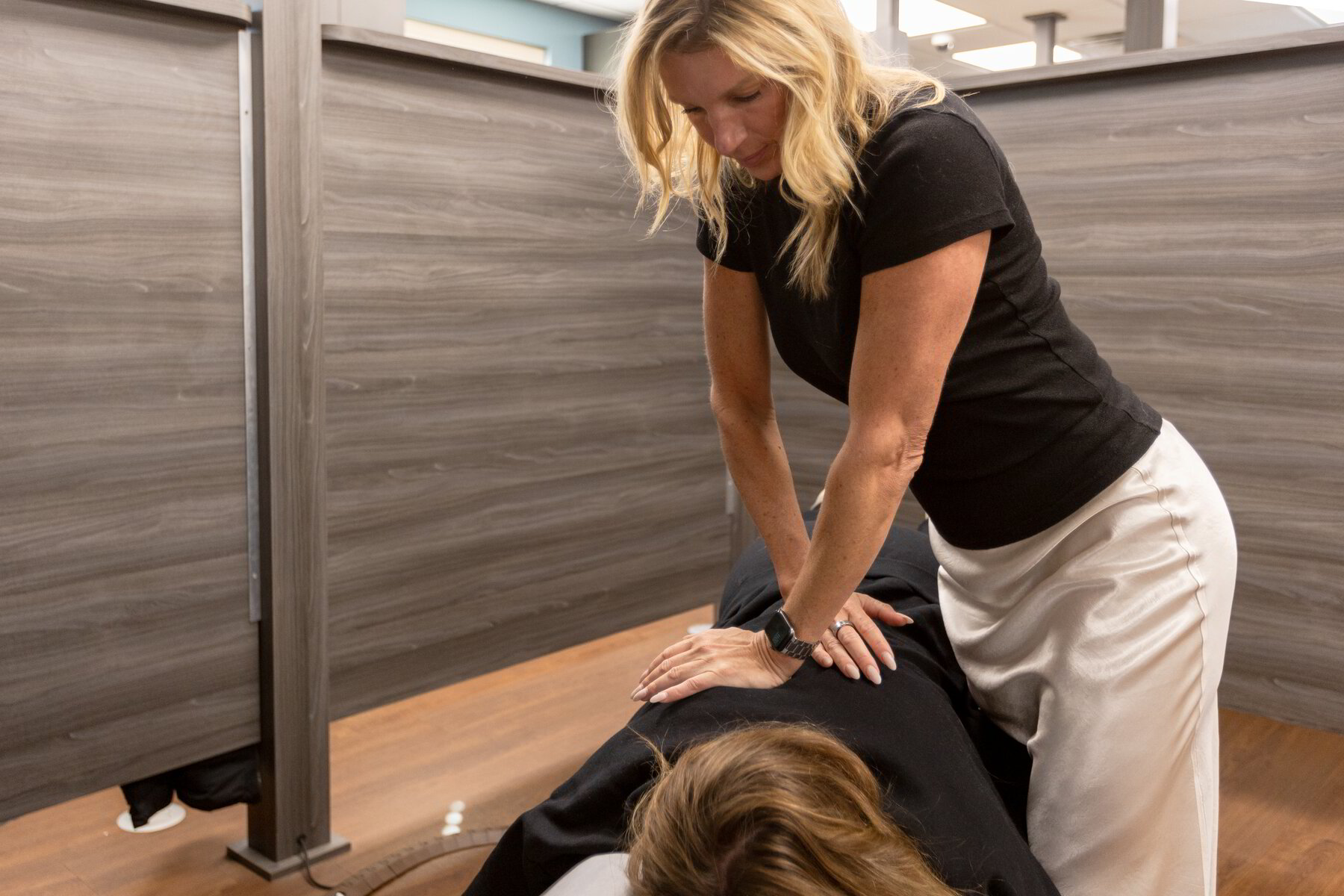
Let me walk you through what safe, effective chiropractic care for an EDS patient might look like at Back To Health Chiropractic.
Initial Consultation (Week 1):
Comprehensive Assessment:
- Detailed health history, including EDS type and symptom patterns
- Nervous system evaluation (not just structural)
- Discussion of subluxations, pain patterns, and dysautonomia symptoms
- Review of current medications and other therapies
Safety First:
- Identification of contraindications (especially if vascular EDS is suspected)
- Discussion of technique options
- Realistic goal-setting
- Communication with your existing care team
Gentle Introduction:
- First adjustment is typically minimal — we want to see how your body responds
- Often start with extremities or low-force instrument adjustments
- Focus on nervous system observation
Weeks 2-8: Foundation Phase
Progressive Care:
- Gentle, low-force adjustments 2-3x per week
- Focus on areas creating the most nerve interference
- Incorporation of proprioceptive exercises between visits
- Education on joint protection strategies
What You Might Experience:
- Improved sleep (often the first change)
- Gradual pain reduction
- Better sense of body awareness
- Fewer subluxations as your nervous system "remembers" stability
- Reduced dysautonomia symptoms
Adjustments Along the Way:
- Techniques modified based on your response
- Frequency adjusted if you're too sore or not responding
- Addition of complementary therapies (craniosacral work, soft tissue techniques)
Months 3-6: Optimization Phase
Long-Term Nervous System Support:
- Reduced visit frequency as stability improves
- Emphasis on maintenance and prevention
- Integration of strengthening exercises (carefully prescribed)
- Ongoing monitoring for any adverse responses
The Goal: Not to "fix" your EDS (that's not possible or honest), but to optimize your nervous system function so your body can manage instability more effectively , reducing pain and improving quality of life.
7. Beyond Adjustments: The Holistic Approach EDS Patients Need
Here's what separates good chiropractic care from great chiropractic care for EDS patients: It's never just about the adjustment.
Comprehensive Support Includes:
Nutritional Support:
- Vitamin C and lysine for collagen synthesis
- Magnesium for muscle relaxation and nerve function
- B-complex vitamins for nervous system health
- Anti-inflammatory nutrition strategies
(At Back To Health Chiropractic, we offer physician-grade supplements specifically chosen for nervous system support and tissue health.)
Lifestyle Modifications:
- Joint protection strategies for daily activities
- Sleep optimization (crucial for nervous system recovery)
- Stress management techniques
- Pacing strategies to prevent flare-ups
Movement Integration:
- Low-impact strengthening (not stretching — you're already hypermobile!)
- Proprioceptive training exercises
- Core stabilization work
- Safe cardiovascular options
Community Connection:
- Connection to local EDS support groups
- Coordination with physical therapists who understand hypermobility
- Resources for managing the emotional aspects of chronic illness
Here in West Michigan, we're blessed with a growing network of EDS-aware providers. Whether you're in Zeeland, Portage, or Muskegon, building a comprehensive care team that includes rheumatology, physical therapy, chiropractic, and mental health support gives you the best chance at thriving with EDS.
The Bottom Line: You Deserve Options, Not Blanket "No's"
If you've been told you "can't" see a chiropractor because of your EDS, what you actually can't do is receive inappropriate, high-force adjustments that don't account for your hypermobility.
But you absolutely CAN — and in many cases, should — explore gentle, nervous-system-focused chiropractic care with a provider who understands your condition.
The difference is in:
- The technique
- The provider's expertise
- The individualized approach
- The commitment to safety
- The focus on nervous system optimization over force
At Back To Health Chiropractic, we believe that chiropractic care transforms lives by keeping the nervous system functioning optimally — and that includes the lives of people with Ehlers-Danlos Syndrome. We don't treat EDS; we support your nervous system so your body can function at its best despite the challenges EDS presents.
Is every person with EDS a candidate for chiropractic care? No — particularly those with vascular EDS or certain comorbidities require extreme caution and possibly alternative approaches.
But should you be automatically excluded because of a diagnosis? Absolutely not.
You deserve a provider who listens, who understands the complexities of hypermobility disorders, who uses appropriate techniques, and who sees you as a whole person — not just a condition.
Ready to explore if gentle chiropractic care is right for you?
Frequently Asked Questions About EDS and Chiropractic Care
Q: Is chiropractic care safe for all types of Ehlers-Danlos Syndrome?
A: Different EDS types have different considerations. Hypermobile EDS (hEDS) and classical EDS can often benefit from gentle, low-force chiropractic techniques when provided by an experienced practitioner. However, vascular EDS (vEDS) requires extreme caution due to risks of arterial dissection or rupture. If you have vascular EDS or suspect you might, it's critical to work with your rheumatologist or geneticist before pursuing any manual therapy. At Back To Health, we always conduct thorough health histories and coordinate with your medical team to ensure safety.
Q: What's the difference between a regular adjustment and one modified for EDS?
A: A standard chiropractic adjustment often uses high-velocity, low-amplitude (HVLA) thrusts — quick, forceful movements that create the classic "cracking" sound. For EDS patients, we modify care by using low-force techniques like Activator methods, craniosacral therapy, or Network Spinal Analysis. These approaches use gentle pressure, instrument-assisted adjustments, or light touch to influence the nervous system without pushing joints beyond their already-extended range. The goal shifts from mechanical correction to neurological optimization, which is much safer and often more effective for hypermobile patients.
Q: Will chiropractic care make my joints more unstable?
A: When done correctly with appropriate techniques, no. In fact, gentle chiropractic care can improve proprioception (your body's awareness of joint position), which may actually help stabilize joints over time by improving neuromuscular control. The key is avoiding aggressive manipulations and focusing on nervous system function. High-force adjustments could potentially increase instability, which is precisely why they're not recommended for EDS patients. Any reputable chiropractor working with EDS will prioritize techniques that support stability rather than compromise it.
Q: How do I know if a chiropractor is qualified to work with EDS patients?
A: Look for chiropractors who can specifically articulate their experience with hypermobility disorders and explain how they modify their techniques. Ask these questions: "What's your experience with EDS?" "Which techniques do you use for hypermobile patients?" "How do you coordinate with other providers?" "What would you do if I had an adverse reaction?" A qualified provider will be able to answer confidently, will not dismiss your concerns, and will be willing to start conservatively and adjust based on your response. They should also be comfortable communicating with your rheumatologist or primary care provider.
Q: Can chiropractic care help with dysautonomia symptoms that come with EDS?
A: Emerging research suggests yes — particularly upper cervical chiropractic care. The autonomic nervous system, which regulates functions like heart rate, blood pressure, and digestion, is intimately connected to the upper cervical spine. Gentle corrections in this area can improve vagal tone and help regulate autonomic function. Many EDS patients report improvements in POTS symptoms, digestive issues, and temperature regulation with nervous-system-focused chiropractic care. While chiropractic doesn't treat dysautonomia directly, supporting optimal nervous system function can have positive ripple effects on autonomic regulation.
Take the Next Step Toward Better Nervous System Health
Living with Ehlers-Danlos Syndrome is challenging enough without eliminating care options that could genuinely help. You don't have to navigate this alone, and you don't have to settle for "there's nothing we can do."
At Back To Health Chiropractic, we specialize in nervous system optimization — and that includes working safely and effectively with patients who have complex conditions like EDS. Our approach is gentle, individualized, and always rooted in the latest research and best practices.
📍 Visit Us at One of Our Three West Michigan Locations:
Zeeland/Holland Office
Phone: 616.546.3500
Portage Office
Phone: 269.345.2273
Muskegon Office
Phone: 231.830.1111
🗓️ Ready to Schedule?
Book your consultation online — we'll take the time to understand your unique situation, answer your questions, and determine if chiropractic care is a good fit for you.
🎁 Free Download: "5 Nervous System Reset Strategies for Hypermobility"
Want to start supporting your nervous system today? Download our free guide with gentle, EDS-safe strategies you can implement immediately.
Connect with us on social media:
Instagram: @backtohealthchiroclinics
Facebook: Back To Health Chiropractic (location-specific pages)
TikTok: @backtohealthchiroMI
YouTube: @backtohealthchiropractic9130
You deserve care that honors your body's complexity while supporting its incredible capacity to heal and adapt. Let's explore what's possible together.
To your health,
Dr. Tonya Westerbeke
Back To Health Chiropractic

Dr. Tonya Westerbeke
TAGS
RECENT POSTS