By Dr. Tonya Westerbeke, DC | Back To Health Chiropractic
Updated for 2026
You've Seen the Doctors. You Have the Diagnosis. Now What?
You went to your primary care doctor. You got your DEXA scan. You heard the words — osteoporosis, or maybe osteopenia — and you walked out with a prescription, a pamphlet, and a sinking feeling that your body just became fragile overnight.
Maybe you've been told to avoid certain movements. Maybe you've started second-guessing every step on the stairs. You're not sleeping well because you're afraid of a fracture. And somewhere between the bone density numbers and the well-meaning warnings, you've started to feel like your body is working against you.
That's exactly the kind of patient we see at Back To Health Chiropractic — women (and men) who have a diagnosis, but not a plan. People who are motivated and proactive, but who've been handed fear instead of answers.
So let's answer the real question: Does chiropractic help with osteoporosis?
The short answer: yes — but not in the way most people think. It's not about cracking bones. It's about supporting your whole musculoskeletal system so you can move better, hurt less, fall less, and actually live your life.
Here's what you need to know.
7 Things You Need to Know About Chiropractic Care and Osteoporosis (Updated for 2026)
1. Osteoporosis Is More Common Than You Think — and You Don't Have to Navigate It Alone
If you were just diagnosed with osteoporosis or osteopenia, you're in good company — and that's not a small thing.
According to the CDC, nearly 1 in 5 women over age 50 in the United States has osteoporosis. Over 80% of all osteoporosis cases in the U.S. occur in women. And another 51.5% of women over 50 have low bone mass — meaning they're heading toward osteoporosis if nothing changes.
That's millions of women walking around with bones that are more vulnerable to fracture, compression, and pain — often without a clear, proactive care plan beyond medication.
Here in West Michigan, the chiropractors at Back To Health see this every week. Women who are fit, active, health-conscious — and still surprised by their DEXA results. The good news? A diagnosis of osteoporosis doesn't mean your options are limited. It means your care needs to be smart, coordinated, and tailored to where your bones actually are.
Chiropractic care — the right kind, delivered by an experienced provider who understands bone health — can be a meaningful part of that plan.
2. Standard Chiropractic Adjustments Are Modified for Osteoporosis — Here's What That Looks Like (Updated for 2026)
This is the question everyone wants answered first: Is it safe to get adjusted if I have osteoporosis?
The honest answer is: it depends on the severity — and it depends on the technique.
High-velocity, high-force spinal manipulation (the kind most people picture when they think of "getting adjusted") is not appropriate for patients with advanced osteoporosis or existing compression fractures. Most chiropractic and rheumatology guidelines are consistent on this: high-force thrusting into a significantly compromised spine carries real risk.
But here's what often gets left out of that conversation: there are many other techniques that are entirely appropriate for osteoporotic patients.
The most commonly used alternative is the Activator Method — a low-force, instrument-assisted adjustment that delivers a precise, gentle impulse to specific spinal joints without twisting or thrusting. Research published in PMC supports that the Activator technique can be safely used in patients with osteoporosis and even existing compression fractures.
Other gentle approaches your chiropractor at Back To Health may use include:
- Flexion-distraction technique — slow, rhythmic traction-based movement that decompresses spinal joints without any high-velocity force
- Drop table technique — uses a segmented table that drops slightly as pressure is applied, reducing the force needed
- Soft tissue therapy — massage and myofascial release to address the muscle tension and guarding that often develops alongside osteoporosis-related pain
- Mobilization (not manipulation) — gentle, repetitive movement within the joint's natural range
Your BTH chiropractor will review your DEXA scan results and bone density T-scores before recommending any technique. The lower your bone density, the more conservative the approach — and the better the outcome when the right tools are matched to your specific situation.
3. Pain Management Is Real — and Chiropractic Addresses the Root of It
One of the most common (and least discussed) realities of osteoporosis is the pain that comes with it — not just from fractures, but from the compensatory muscle patterns your body develops to protect vulnerable bones.
When vertebral bodies lose density and begin to compress — even microscopically — the surrounding musculature tightens in response. The erector spinae, multifidus, and quadratus lumborum all attempt to stabilize a spine that has lost structural integrity. Over time, this creates chronic muscle tension, postural changes (including the hyperkyphotic "dowager's hump" posture associated with thoracic osteoporosis), and a cycle of pain that medication alone doesn't resolve.
Chiropractic care at Back To Health addresses this cycle directly:
- Soft tissue work releases the hypertonic muscles bracing around compromised vertebrae
- Gentle mobilization restores joint movement that becomes restricted due to guarding
- Postural correction addresses the forward head position and rounded shoulders that develop as the thoracic spine compresses
- Exercise guidance targets the specific muscle groups — core stabilizers, hip extensors, and mid-back extensors — that protect the spine and reduce fracture risk
This is whole-person care. Not just treating your bone density number on paper, but treating the body you're actually living in.
4. Chiropractic and Bone Density: What the Research Actually Says (Updated for 2026)
There is a common misconception that chiropractic care directly increases bone mineral density (BMD). To be straightforward with you: the primary research on direct BMD improvement focuses on exercise, nutrition, and pharmacological treatment — not spinal manipulation.
However, chiropractic care plays a meaningful supporting role in bone health in several well-documented ways:
Exercise guidance from your chiropractor can directly influence bone density. Research published in BMC Musculoskeletal Disorders (PMC9288128) confirms that weight-bearing and resistance exercise programs are among the most effective non-pharmacological interventions for preventing bone loss and improving BMD in postmenopausal women. DCs are trained to prescribe these programs — and patients who receive exercise guidance through chiropractic care are more likely to be consistent with them.
Chiropractic is one of the most utilized forms of complementary care by older adults. A peer-reviewed commentary in Chiropractic & Manual Therapies (Dyer et al., 2012, PMC3306193) found that approximately 5% of older adults in the U.S. use chiropractic care annually, and that DCs play a meaningful role in nutritional counseling, fall prevention, and exercise guidance in this population — all directly relevant to osteoporosis management.
A published case study in the Journal of Chiropractic Medicine (PMC3315872) documented successful chiropractic management of an 83-year-old patient with low back pain, osteoporosis, multiple compression fractures, and a history of leukemia using the Activator technique — demonstrating that carefully selected, low-force methods can be both safe and effective in complex presentations.
Nutrition support is part of the picture. Chiropractic clinics have long played a role in osteoporosis screening and prevention. A paper in PubMed (PMID 3235926) notes that dietary calcium of 1–1.5g/day and adequate weight-bearing exercise are foundational to maximizing bone mass across all age groups — guidance that DCs routinely provide.
It's worth being honest about something: high-quality RCTs examining chiropractic care outcomes specifically in osteoporosis patients are limited. Most of the evidence base in this area consists of case reports, case series, and expert consensus — which is exactly why the Delphi process referenced above (establishing best practices for chiropractic in older adults) matters. The absence of large controlled trials doesn't mean chiropractic isn't helpful — it means the research hasn't caught up to clinical practice yet. What we do have is strong evidence for the individual components: exercise for bone density, fall prevention for fracture risk, and gentle manual therapy for pain and function in older adults. The integration of those elements is what chiropractic care for osteoporosis actually looks like in practice.
5. Fall Prevention: The Underrated Reason Chiropractic Matters Most for Osteoporosis
Here's the piece that often gets overlooked entirely: for someone with osteoporosis, it's not just about your bones. It's about what happens if you fall.
A hip fracture in a woman over 65 with osteoporosis carries a sobering prognosis. A study published in PMC (2025, PMC12335810) on osteoporosis-associated mortality in postmenopausal women found that fracture-related complications remain a leading cause of morbidity and mortality in this population. The U.S. faces projections of 3 million fragility fractures by 2025 — and most of them are preventable.
Chiropractic care contributes meaningfully to fall prevention through:
Balance and proprioception. The spine and its surrounding joints are packed with proprioceptive nerve endings — sensory receptors that tell your brain where your body is in space. When spinal joints are restricted or poorly mobile, that feedback system becomes less accurate. Gentle chiropractic care helps restore joint mobility and proprioceptive input, improving balance responses.
Gait and movement mechanics. Your chiropractor can assess how you're walking, identify compensatory patterns (a stiff hip, a locked SI joint, a weak glute), and correct them — reducing the likelihood that a misstep turns into a fall.
Core and hip strength programming. The BTH team commonly provides exercise prescriptions targeting the deep core stabilizers and hip abductors — the muscles most critical to preventing falls and protecting the femoral neck, the most common site of osteoporotic fracture.
Medication awareness. Some osteoporosis medications and other common prescriptions (blood pressure meds, sleep aids, anxiety medications) increase fall risk as a side effect. DCs trained in geriatric care can flag this and coordinate with your prescribing physician.
At Back To Health, fall prevention isn't a separate program — it's woven into how we approach every patient with osteoporosis.
6. The Whole-Body Picture: What Chiropractic Care Looks Like as Part of Your Osteoporosis Plan
Chiropractic care doesn't replace your endocrinologist, your OB-GYN, or your primary care doctor when it comes to osteoporosis. It works best as part of an integrated care team.
Here's what a well-coordinated care plan for osteoporosis might look like with the BTH team involved:
Medical care: DEXA scans every 1–2 years, medication evaluation, calcium and vitamin D monitoring, hormone assessment
Chiropractic care at BTH:
- Initial intake including review of your DEXA T-scores and fracture history
- Modified, low-force adjustments appropriate to your bone density level
- Soft tissue therapy for muscle guarding and postural correction
- Fall risk assessment
- Personalized exercise prescription (weight-bearing and resistance)
- Nutritional guidance on calcium, vitamin D, magnesium, and protein intake
- Coordination with your medical providers as needed
At home:
- Consistent weight-bearing exercise (walking, stair climbing, light strength training)
- Adequate protein intake — often under-prioritized in older women
- Reducing fall hazards in the home environment
- Mindful movement practices (Tai Chi has published evidence for slowing bone loss; see PMC10712169)
This is the kind of comprehensive support that your DEXA result alone can't give you.
7. What to Expect at Your First Visit at Back To Health as an Osteoporosis Patient (Updated for 2026)
Walking into a chiropractic office when you have osteoporosis can feel intimidating — especially if your image of chiropractic is someone getting forcefully twisted and cracked.
Let us put your mind at ease about what actually happens.
At Back To Health Chiropractic, your first visit as an osteoporosis patient includes:
A thorough health history. We want to know your T-scores, your fracture history, any current medications, your pain locations, your activity level, and your goals.
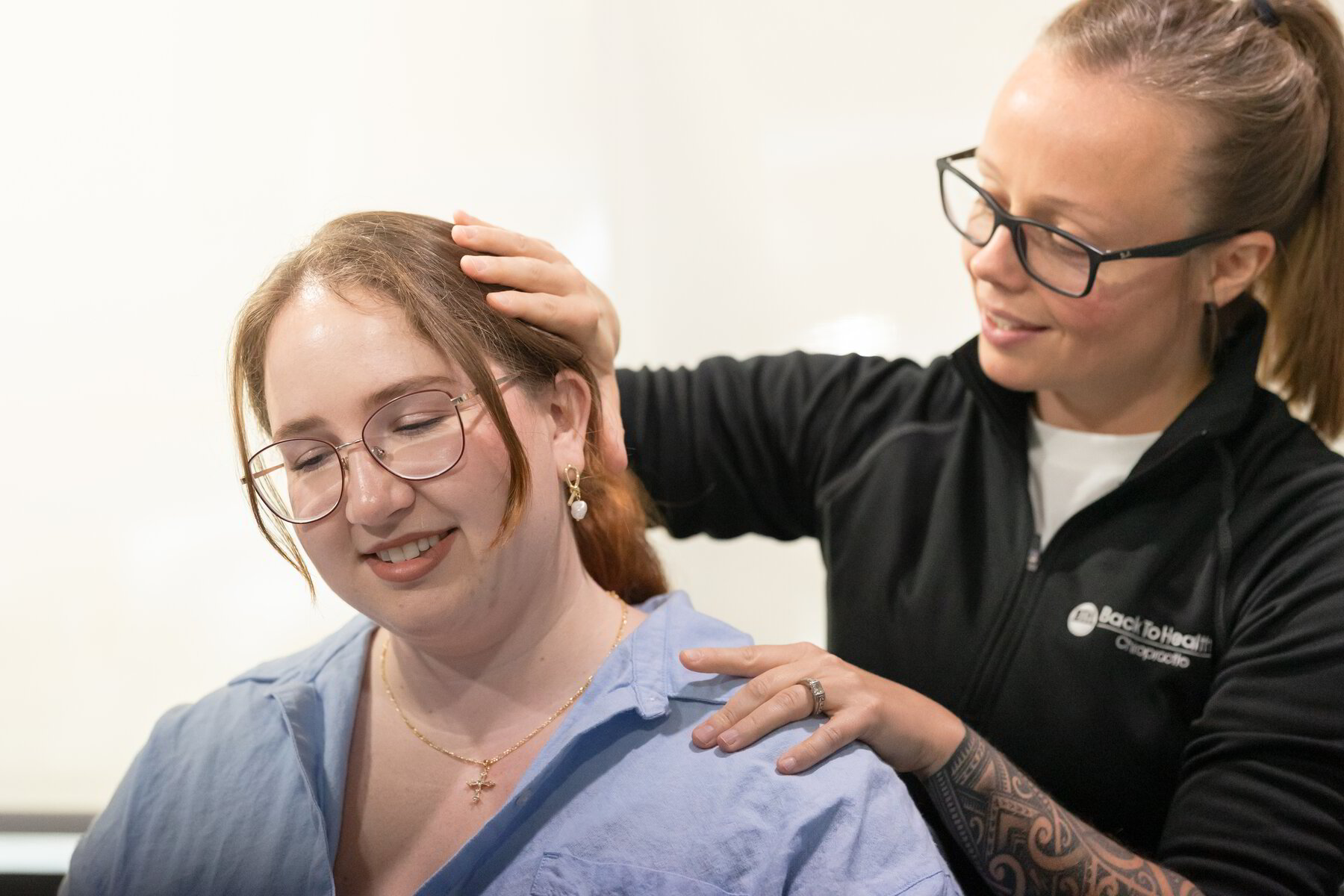
A physical and postural assessment. We look at how your spine is positioned, where you're compensating, how your joints are moving, and where the pain is actually coming from.
A clear conversation about techniques. Before any hands-on care begins, we'll explain exactly what we're planning to do, why, and how it differs from standard high-force adjustments. You will never receive a treatment you didn't understand and agree to first.
A personalized care plan. Your plan will be built around your bone density levels, your pain, your goals, and what's realistic. No two osteoporosis patients are the same, and your care shouldn't be either.
Our team has extensive experience working with patients who have osteoporosis, osteopenia, compression fractures, and related conditions. We work alongside your medical providers — not in competition with them.
When to Seek Medical Attention First
Chiropractic care is not the right first step in every situation. Please seek immediate medical evaluation if you experience:
- Sudden, severe back pain after a fall, bump, or even a cough or sneeze — this can indicate an acute compression fracture
- Neurological symptoms such as numbness, tingling, or weakness in the arms or legs
- Significant height loss over a short period (may indicate multiple vertebral compressions)
- Back pain that wakes you from sleep and is unrelieved by position change
- New onset of bladder or bowel changes combined with back pain — seek emergency care
A fracture needs to be diagnosed and stabilized before any manual therapy is appropriate. If you're unsure whether your pain represents a new fracture, please get an X-ray or imaging before starting chiropractic care. The BTH team can help coordinate that process and will always refer you out when imaging is indicated.
Frequently Asked Questions About Chiropractic and Osteoporosis
Can I get a chiropractic adjustment if I have osteoporosis? Yes, in most cases — but the technique will be modified based on your bone density and fracture history. High-force spinal manipulation is not appropriate for advanced osteoporosis. Low-force methods like the Activator technique, flexion-distraction, and mobilization are commonly used safely with osteoporotic patients. Your chiropractor will review your DEXA results and customize your care accordingly.
Will chiropractic care increase my bone density? Chiropractic care is not a direct bone-building treatment the way medication or resistance exercise is. However, chiropractors support bone health meaningfully through exercise prescription, nutritional guidance, fall prevention, and pain management — all of which are critical components of comprehensive osteoporosis care.
Is chiropractic safe if I've already had a compression fracture? This depends on the location, age, and severity of the fracture. An acute, recent fracture needs to heal before any manual therapy is applied to that region. Once stable, gentle techniques that avoid the fracture site can often be safely used. Always disclose your fracture history to your chiropractor before treatment begins.
How does chiropractic help with osteoporosis-related back pain? Osteoporosis leads to compensatory muscle tension, postural changes, and restricted joint movement — all of which contribute to chronic pain. Chiropractic care addresses these through soft tissue therapy, gentle mobilization, postural correction, and targeted exercise guidance. This breaks the cycle of guarding and tension that keeps osteoporosis pain going.
What's the difference between osteoporosis and osteopenia, and does it change my chiropractic care? Osteopenia means your bone density is lower than normal but not yet in the osteoporosis range. Osteoporosis is the more advanced stage. Both conditions are taken seriously at BTH, and both may involve modified techniques — though the degree of modification is typically less for osteopenia than for osteoporosis. Your T-score from your DEXA scan gives us specific guidance.
The Bottom Line: You Deserve a Care Team That Meets You Where You Are
A diagnosis of osteoporosis is not the end of the story. It's information — and information is power when you have a team that knows how to use it.
At Back To Health Chiropractic, we've built our practice on the belief that people deserve care that sees the whole person, not just the bone density number. We know how to work with fragile spines. We know how to reduce pain without adding risk. And we know how to help you stay strong, mobile, and confident in your body — because that's what your bones need most.
Whether you're in Zeeland, Portage, or Muskegon, our team is ready to be part of your care plan.
🎁 Free Download: The Osteoporosis Patient's Guide to Safe Movement
Not sure which exercises are safe with osteoporosis? Wondering what positions to avoid? Grab our free guide — built specifically for patients in the osteoporosis and osteopenia range — covering the top 6 movements that protect your bones, the 3 you should modify, and simple daily habits that reduce your fracture risk.
[Download the Free Guide → Enter your name + email below]
Ready to Talk to a Chiropractor About Your Bone Health?
Our team has extensive experience working with patients managing osteoporosis, osteopenia, compression fractures, and age-related spinal changes. We'll review your imaging, create a plan that fits your body, and work alongside your medical providers to make sure all the pieces fit together.
Book your appointment online:
👉 bthclinics.com/locations
Or call us directly:
Zeeland: 616.546.3500
Portage: 269.345.2273
Muskegon: 231.830.1111
Back To Health Chiropractic serves patients across West Michigan including Zeeland, Holland, Portage, Kalamazoo, Muskegon, and surrounding communities.
Download The Osteoporosis Patient's Guide to Safe Movement

Dr. Tonya Westerbeke
TAGS
RECENT POSTS