By Dr. Tonya Westerbeke, DC | Back To Health Chiropractic Updated for 2026
You did everything right. You rested. You applied heat. You took the muscle relaxer your doctor prescribed. You waited it out — again.
And yet here you are, back in the same place you were three months ago. Flat on the floor. Can't stand up straight. Afraid to sneeze. Wondering if this is just going to be your life now.
If that sounds familiar, you are not alone — and you are not broken. Back spasms are one of the most debilitating experiences a person can have, and the frustrating truth is that the standard playbook (rest, medication, "give it time") does almost nothing to address why they keep coming back.
There's a reason for that. And there's a better path forward.
In this post, you'll learn:
- What's actually happening inside your body during a back spasm
- Why the muscles keep going into crisis — even when the "acute" episode resolves
- How chiropractic care addresses the underlying cause, not just the symptom
- What the research says about chiropractic vs. muscle relaxants
- When to seek immediate medical attention
- What to expect if you visit our team at Back To Health Chiropractic
Recent data confirms the problem is widespread: Low back pain affects approximately 619 million people globally, and muscle spasm is one of the most common and disabling presentations driving emergency visits, missed work days, and frustrated patients who feel they've exhausted their options.
Let's break this down — all the way to the root.
7 Things You Need to Know About Crippling Back Spasms (Updated for 2026)
1. A "Back Spasm" Is Your Body Screaming, Not Malfunctioning
Here's a perspective shift that changes everything: a back spasm is not your muscles randomly failing. It is your nervous system doing exactly what it's supposed to do.
When your spine is under mechanical stress — whether from a misaligned vertebra, a compressed disc, unstable joints, or accumulated postural strain — your brain sends a crisis signal to the surrounding musculature: Lock it down. Protect the structure.
The result is a powerful, involuntary contraction of your paraspinal muscles — specifically the erector spinae, multifidus, and quadratus lumborum groups that run along either side of your lumbar spine. These muscles don't "spasm" because they're weak or defective. They spasm because they're guarding something.
The problem? That protective spasm also compresses the very structures it's trying to protect. It reduces circulation. It increases nerve irritation. It creates a self-reinforcing feedback loop — spasm → pain → more spasm → more pain — that feels impossible to escape.
Until you address what triggered the alarm in the first place, the alarm keeps going off.
2. The Spinal Subluxation Connection Most Doctors Miss — Updated for 2026
The term "subluxation" in chiropractic refers to a spinal segment that has lost its proper alignment, motion, or both. This isn't just a structural problem — it's a neurological one.
When a vertebral joint is restricted or misaligned, it alters the input your nervous system receives from the mechanoreceptors (motion sensors) embedded in that area. The brain interprets this aberrant signal as a threat. In response, it increases muscle tone around the affected joint — an involuntary process you have zero conscious control over.
This is why you can go to sleep "fine" and wake up unable to get out of bed. The underlying spinal dysfunction has been building — quietly, incrementally — until one ordinary movement (bending to pick up a laundry basket, reaching for your coffee mug, sneezing) becomes the straw that breaks the camel's back. Literally.
The lumbar vertebrae — specifically L3, L4, and L5 — are the most common sites for this kind of dysfunction, particularly the L4-L5 and L5-S1 segments where mechanical load is greatest. When these segments lose their proper motion, the multifidus muscle (which crosses directly over these joints and serves as their primary stabilizer) becomes chronically overloaded and prone to crisis contraction.
This is the mechanism most standard medical care never touches. It's also exactly what chiropractic adjustments are designed to correct.
3. Why Muscle Relaxants Keep Failing You
We're not here to vilify medications — sometimes they serve a purpose in the acute phase. But here's what the research actually tells us about muscle relaxants for back spasms:
They address the output (muscle contraction) without touching the input (the neurological driver creating that contraction).
Think of it this way: if your smoke detector is going off because your house is on fire, taking a muscle relaxant is like removing the battery from the detector. The alarm stops. The fire doesn't.
What the research says:
Hoiriis et al. (2004) conducted a randomized, double-blind clinical trial published in the Journal of Manipulative and Physiological Therapeutics comparing chiropractic adjustments to muscle relaxants for subacute low back pain. In 192 patients experiencing 2–6 weeks of low back pain, the chiropractic group responded 24% better than placebo in reducing pain scores — and performed significantly better than the muscle relaxant group as well. The muscle relaxant group showed no statistically significant improvement over placebo.
Read that again: muscle relaxants, in a controlled study, showed no significant improvement over placebo for subacute low back pain. Meanwhile, chiropractic care showed measurable, statistically significant results — not just in pain, but in overall severity reduction.
This isn't an isolated finding. It's consistent with a large body of research showing that mechanical problems in the spine require mechanical solutions — not pharmaceutical ones.
4. Here's What Chiropractic Care Actually Does to Muscle Spasms (The Neuroscience)
When your chiropractor delivers a specific spinal adjustment to a restricted or misaligned segment, something powerful happens — not just in the bones, but in your nervous system.
Landmark research by Dr. Joel G. Pickar, published in The Spine Journal (2002, 2(5):357-71), provided foundational evidence that spinal manipulation directly impacts primary afferent neurons from paraspinal tissues, the motor control system, and pain processing. The study confirmed that spinal manipulation stimulates muscle spindle afferents (Group Ia and Group II nerve fibers) and evokes changes in paraspinal muscle reflexes, altering the very excitability of the motor neurons that drive muscle contraction.
In plain language: the adjustment resets the neurological signal that's keeping your muscles locked up.
This is not a temporary numbing of symptoms. It is a direct intervention into the neurological feedback loop that creates and sustains the spasm. When a restricted spinal segment regains its proper motion, the aberrant input that was triggering your nervous system's guarding response is interrupted. The alarm can finally stand down.
This is also why patients who receive chiropractic care often notice relief not just in the adjusted area, but in the broader muscular tension patterns that had built up around the problem — because those secondary muscles were recruited into the guarding response as well.
5. The Evidence Behind Spinal Manipulation for Back Pain — Updated for 2026
The research base for chiropractic care has grown substantially over the past decade. Here is what verified, peer-reviewed evidence shows:
Rubinstein SM et al. (2019). "Benefits and harms of spinal manipulative therapy for the treatment of chronic low back pain: systematic review and meta-analysis of randomised controlled trials." BMJ. This landmark meta-analysis reviewed 47 randomized controlled trials with 9,211 participants and found that spinal manipulative therapy (SMT) produces effects comparable to guideline-recommended interventions for chronic low back pain — and was significantly superior to non-recommended interventions at 1 month, 6 months, and 12 months follow-up.
Hoiriis KT et al. (2004). "A randomized clinical trial comparing chiropractic adjustments to muscle relaxants for subacute low back pain." Journal of Manipulative and Physiological Therapeutics, 27(6):388-98. 192 participants. Chiropractic outperformed both muscle relaxants and placebo on pain scores and global severity. Muscle relaxants showed no significant improvement over placebo. [Verified citation]
Pickar JG (2002). "Neurophysiological effects of spinal manipulation." The Spine Journal, 2(5):357-71. Provided neurophysiological evidence that spinal manipulation stimulates muscle spindle afferents, evokes paraspinal muscle reflexes, and alters motor neuron excitability — a direct mechanism for resolving spasm-producing feedback loops. [Verified citation]
Additionally, an evidence review cited in the 2022 Frontiers in Pain Research narrative analysis confirmed that 88% of clinical practice guideline recommendations for acute/subacute low back pain favored spinal manipulative therapy, and 100% of recommendations for chronic low back pain included SMT as a core intervention.
6. What a Back Spasm Visit Looks Like at Back To Health Chiropractic
You're in pain. You don't want a lecture — you want help. Our team gets that. Here's what you can expect when you come to us in the middle of a spasm episode:
Comprehensive Assessment First. Before any treatment, our doctors take a full history and perform a thorough examination — including orthopedic and neurological testing — to identify exactly which spinal segments are involved, rule out any structural contraindications, and understand the full picture of what's driving your spasm.
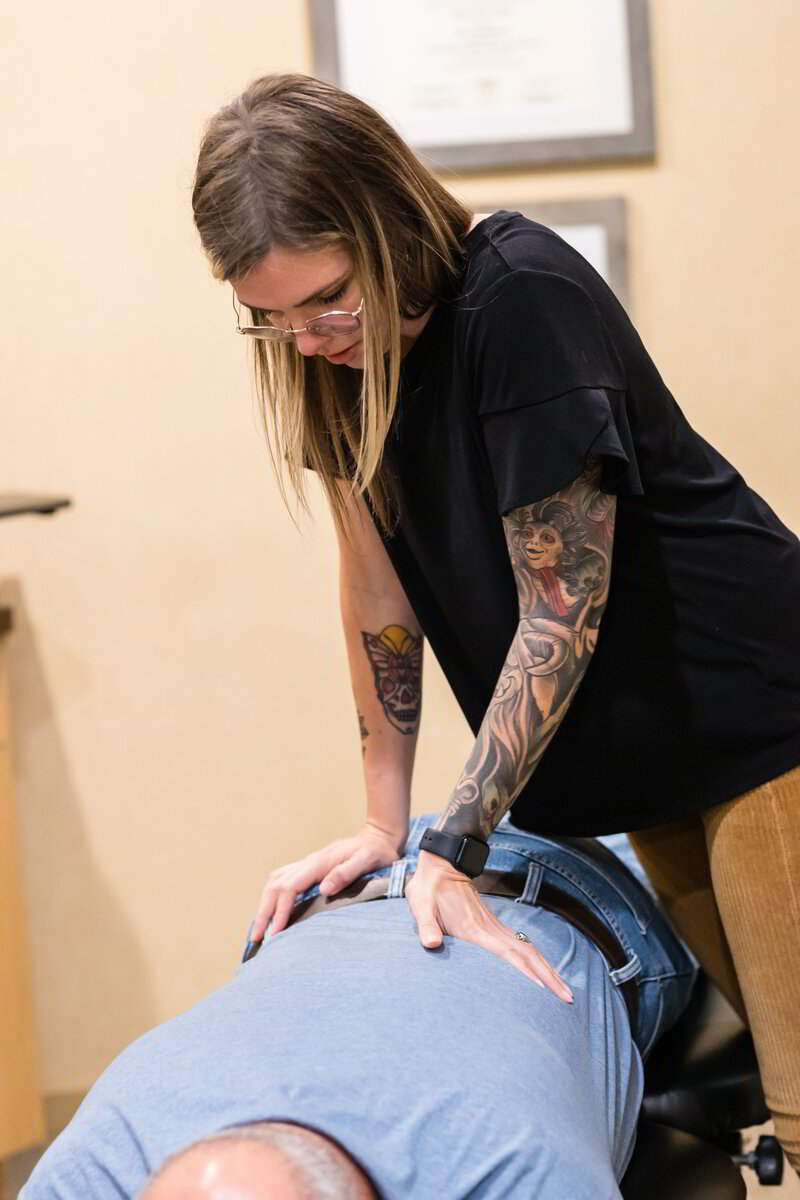
Gentle, Targeted Care. We work with your body, not against it. During an acute spasm, we may use gentle mobilization techniques, soft tissue work, or instrument-assisted methods before progressing to more specific spinal adjustments. We never force anything. We meet you where you are.
I n-Office Modalities That Accelerate Recovery. Back To Health Chiropractic offers several complementary therapies that pair beautifully with spinal adjustments during a spasm episode, including:
- Therapeutic muscle work to release the secondary muscle guarding around the primary spinal dysfunction
- Spinal decompression therapy for cases where disc involvement is contributing to the spasm trigger
- IASTM (Instrument-Assisted Soft Tissue Mobilization) to address fascial restriction and muscle adhesion
A Plan That Goes Beyond the Acute Episode. This is where we diverge most from the standard model. Our goal isn't just to get you out of the spasm — it's to identify and correct the underlying spinal dysfunction so it doesn't keep triggering the same crisis. We'll talk with you honestly about what's driving your pattern, and build a care plan that gives your spine the stability it needs to stop sending those alarm signals.
We serve patients across West Michigan at our Zeeland, Portage, and Muskegon locations — and our Holland location is opening summer 2026.
7. What You Can Do RIGHT NOW to Help Yourself
While you're working on getting in to see us, here are evidence-informed steps that support your recovery:
Move gently — don't freeze. Complete bed rest is no longer recommended for acute back pain. Short, gentle movement (slow walking, gentle rocking) helps interrupt the pain-spasm cycle and maintains circulation to the affected tissues.
Heat vs. Ice: Heat is generally more effective for muscle spasm (as opposed to acute injury) because it increases circulation and reduces muscle contraction. Apply moist heat for 15–20 minutes several times daily.
Avoid the positions that provoke it — but don't guard indefinitely. Staying in one position too long, even a "comfortable" one, will worsen spasm. Move frequently.
Breathe. Slow, diaphragmatic breathing activates the parasympathetic nervous system, which has a direct dampening effect on the sympathetic (fight-or-flight) response that amplifies pain and muscle guarding. Try 4-count inhale, 6-count exhale.
Don't wait too long to get evaluated. The longer a spasm episode persists without addressing the underlying spinal dysfunction, the more ingrained the compensatory muscle patterns become — and the harder they are to unwind.
When to Seek Immediate Medical Attention
While most back spasms are musculoskeletal in origin and respond well to chiropractic care, some symptoms require urgent medical evaluation. Seek immediate care if you experience:
- Loss of bladder or bowel control alongside your back pain (this could indicate cauda equina syndrome — a medical emergency)
- Numbness or tingling that runs down one or both legs into the feet
- Significant leg weakness that is new or rapidly worsening
- Back pain following a serious fall, car accident, or direct trauma
- Back pain accompanied by fever, unexplained weight loss, or pain that is significantly worse at night and not related to position
- Back pain in anyone with a history of cancer, osteoporosis, or long-term steroid use
These symptoms may indicate a more serious underlying condition that requires imaging or urgent medical assessment before chiropractic care is appropriate. Our team will always refer you to the appropriate provider if we identify anything that warrants further investigation.
Frequently Asked Questions About Chiropractic Care and Back Spasms
How quickly can chiropractic care relieve a back spasm?
Many patients notice significant relief within 1–3 visits during an acute episode — sometimes within the first visit. However, the goal isn't just to resolve the spasm; it's to address the underlying spinal dysfunction so it doesn't trigger another one. Depending on how long the underlying issue has been building, your care plan may span several weeks to produce lasting results.
Is it safe to get a chiropractic adjustment during an active, severe spasm?
Yes, in most cases — though the approach will be modified based on your current presentation. Our doctors are trained to assess your specific situation and adapt their techniques accordingly. During a severe acute episode, we often begin with gentler methods before progressing to specific spinal adjustments. There is no single approach that applies to everyone.
Can back spasms become chronic if left untreated?
Absolutely. When the spinal dysfunction driving the spasm pattern is never addressed, the nervous system essentially learns to default to that protective muscle-guarding state. Over time, you may find that the spasms occur more frequently, are triggered by increasingly minor movements, or become your new baseline level of tension. This is why we encourage patients not to wait out spasm episodes hoping they'll self-resolve permanently.
What's the difference between a back spasm and a muscle strain?
A muscle strain involves actual micro-tearing of muscle fibers from overexertion or sudden movement. A back spasm is a neurologically-driven involuntary contraction, often occurring without any direct trauma to the muscle itself. The two can overlap, but the treatment approach differs. Chiropractic care is particularly well-suited for spasm because it addresses the neurological input driving the contraction — not just the tissue.
Will I need to keep coming to the chiropractor forever?
Not forever — but regular maintenance care is something many patients choose once they experience the difference it makes. Think of it like dental care: you don't just go to the dentist when you have a toothache. Periodic check-ins keep your spine functioning optimally and help prevent the accumulation of dysfunction that leads to crisis episodes. We'll give you an honest assessment of what your spine needs, and you'll always be in control of your care decisions.
The Bottom Line: Your Back Spasms Are Telling You Something. Are You Listening?
A crippling back spasm is one of the most humbling experiences a person can have. It stops you in your tracks. It reminds you — in the most uncomfortable way possible — that you cannot power through everything.
But here's the truth we want you to hold onto: this is your body working for you, not against you. The spasm is a signal. It's asking for something to change.
At Back To Health Chiropractic, our team's approach to back spasms begins where most treatments stop — at the neurological root of the problem. We look at the whole spine, the whole patient, and the whole story. We care about getting you out of pain and keeping you there.
You were built for more than managing flare-ups.
Ready to get to the root of your back spasms?
📍 Schedule online at all three locations: https://bthclinics.com/locations
📞 Call us directly:
Zeeland: 616.546.3500
Portage: 269.345.2273
Muskegon: 231.830.1111
Follow Us
📺 YouTube: Back To Health Chiropractic
📸 Instagram: @backtohealthchiroclinics
🎵 TikTok: @drtonyawesterbeke
Facebook:
Zeeland: facebook.com/bthcwc
Muskegon: facebook.com/bthcmuskegon
Portage: facebook.com/backtohealthportage
🎁 Free Download: "5 Moves to Calm a Back Spasm and Prevent the Next One" — Enter your name and email below to get your guide instantly. Because you deserve tools that work — not just permission to wait it out.
Back To Health Chiropractic serves families, athletes, expecting mothers, seniors, and anyone ready to stop managing pain and start transforming their health. With locations in Zeeland, Portage, Muskegon — and Holland opening summer 2026 — we're here when you're ready.

Dr. Tonya Westerbeke
TAGS
RECENT POSTS