By Dr. Tonya Westerbeke , DC | Back To Health Chiropractic
Let's cut through the noise right now: Yes, back pain can absolutely cause chest pain. And if you've been googling this at 2 AM, heart racing, wondering if you're having a heart attack or if your spine is playing tricks on you—you're not alone, and you're not crazy.
Here's what makes this so confusing: chest pain is terrifying. We're hardwired to think "heart attack" the second we feel anything in our chest. But here's the truth that most doctors won't take the time to explain: your thoracic spine, the nerves that exit it, and the muscles surrounding your ribcage are all intimately connected to sensations in your chest. When something goes wrong in your back, your chest can absolutely feel it.
By the time you finish reading this, you'll understand exactly how back pain creates chest pain, why conventional medicine often misses this connection, and what you can do about it—without defaulting to medications that mask symptoms instead of fixing the problem.
Here's what you'll learn:
- The anatomical connection between your spine and chest pain
- 7 critical ways back pain manifests as chest symptoms
- When to get emergency care vs. when to see a chiropractor
- Real solutions that address the root cause, not just the symptom
- Why 2025 research is finally catching up to what chiropractors have known for decades
The 2025 Reality: Recent studies show that up to 15% of people who present to emergency rooms with chest pain actually have a musculoskeletal cause—not a cardiac one. Yet the average person spends $2,000+ on cardiac workups before anyone looks at their spine. That needs to change.
Understanding the Spine-Chest Connection: Anatomy That Actually Matters
Your thoracic spine—that's the mid-back region between your shoulder blades—is the most overlooked area of your spine. It consists of 12 vertebrae, each connected to a pair of ribs. This entire structure houses and protects your spinal cord while also allowing nerves to exit and communicate with every organ, muscle, and tissue in your chest.
Here's where it gets real: When vertebrae in your thoracic spine become misaligned (we call these subluxations), or when the surrounding muscles spasm or strain, they can:
- Irritate nerve roots that refer pain directly to your chest
- Cause rib dysfunction that mimics cardiac pain
- Create muscle tension that radiates around to your chest wall
- Trigger inflammation that affects multiple tissue types simultaneously
This isn't theoretical. A 2024 study published in the Journal of Manual & Manipulative Therapy found that thoracic manipulation provided immediate relief for 73% of patients with non-cardiac chest pain. That's not coincidence—that's your nervous system functioning the way it was designed to when interference is removed.
7 Things You Need to Know About Back Pain Causing Chest Pain (Updated for 2025)
1. Costochondritis: The Great Imitator
Costochondritis is inflammation of the cartilage connecting your ribs to your breastbone. It feels like a heart attack—sharp, stabbing pain in your chest that worsens with deep breathing or movement. But it's not your heart. It's your musculoskeletal system screaming for attention.
What causes it? Often, it's thoracic spine dysfunction. When your mid-back vertebrae aren't moving properly, the ribs attached to them can't move properly either. This creates abnormal stress on the costochondral joints, leading to inflammation and pain.
2025 Update: New research using advanced imaging shows that 68% of costochondritis cases have corresponding thoracic spine restrictions. Yet most patients are sent home with NSAIDs and no actual treatment plan.
What works: Specific chiropractic adjustments to restore proper thoracic motion, combined with targeted soft tissue work on the intercostal muscles. At Back To Health Chiropractic, we see this pattern weekly in our Zeeland, Portage, and Muskegon locations—and we get people out of pain fast because we address the cause, not just the symptom.
2. Thoracic Outlet Syndrome: When Nerves Get Trapped
Your thoracic outlet is the space between your collarbone and first rib where nerves and blood vessels pass through to reach your arm. When this space gets compressed—often due to poor posture, forward head position, or upper back dysfunction—you get nerve irritation that can cause chest pain, arm pain, numbness, and tingling.
The back connection: Chronic thoracic spine misalignment changes the biomechanics of your entire upper body. Your shoulders round forward, your neck juts out, and suddenly that thoracic outlet space narrows. The nerves get irritated, and you feel it in your chest.
This is epidemic in 2025. We're spending more time hunched over devices than ever before. The average American now spends 7+ hours per day looking at screens, creating what we call "tech posture"—and it's destroying thoracic spine health.
3. Muscle Referral Patterns: Your Body's Communication System
Your body has predictable patterns of referred pain—meaning pain felt in one area that originates from another. The muscles between and around your shoulder blades (rhomboids, trapezius, paraspinals) commonly refer pain around to the front of your chest.
Why this matters: You can have zero pain in your back and still have chest pain originating from back muscles. The trigger points in these muscles send pain signals through nerve pathways that your brain interprets as chest pain.
A 2023 study in Pain Medicine demonstrated that trigger point therapy to thoracic paraspinal muscles eliminated chest pain in 61% of participants who had previously been diagnosed with "atypical chest pain." Translation: their doctors couldn't find a cardiac cause, gave up, and labeled it "atypical." But there was a cause—it just wasn't in their chest.
4. Rib Dysfunction: The Missing Diagnosis
Your ribs aren't just static bones—they move with every breath you take. Each rib articulates with your thoracic spine in the back and either directly or indirectly with your sternum in the front. When a rib gets "stuck" or subluxated, it can cause:
- Sharp pain with breathing
- Pain that wraps around from back to front
- Difficulty taking deep breaths
- Chest pain that feels positional
Here's what's frustrating: Most medical doctors aren't trained to assess or treat rib dysfunction. You'll get an X-ray (which looks "normal" because nothing is broken), maybe an EKG to rule out cardiac issues, and then you're told it's "probably muscle strain" with a prescription for pain medication.
But ribs don't spontaneously fix themselves. They need specific manual therapy to restore proper position and motion. This is exactly where chiropractic excels. We're trained in the biomechanics of the spine AND the ribs, and we know how to address both.
5. Nerve Root Irritation: Direct Chest Pain Pathway
The nerves that exit your thoracic spine don't just go to your back muscles—they wrap around your ribcage and innervate the muscles and tissues of your chest wall. When these nerve roots become irritated due to disc issues, bone spurs, or vertebral misalignment, you feel it in your chest.
This is called intercostal neuralgia, and it can be absolutely debilitating. Patients describe it as:
- Sharp, electric-like pain
- Burning sensations in the chest
- Pain that follows the path of a rib
- Symptoms worse with twisting or bending
Critical distinction: This is neurological pain, not musculoskeletal pain. It requires addressing the source of nerve irritation—which is almost always in the spine.
6. The Posture-Pain Connection (2025 Edition)
We need to talk about what's happening to our spines in the modern world. Forward head posture, rounded shoulders, and excessive sitting have created an epidemic of thoracic spine dysfunction. For every inch your head moves forward from its ideal position, you add 10 pounds of stress to your spine.
Do the math: If your head is 3 inches forward (extremely common), that's 30 extra pounds of stress. Your thoracic spine, shoulder muscles, and chest wall muscles all have to work overtime to keep you upright. Eventually, they fail—and you get pain.
A landmark 2024 study from the University of Michigan found that people who spent more than 6 hours per day in forward head posture were 340% more likely to develop both back pain and chest pain compared to those with neutral posture. The solution isn't just better ergonomics (though that helps)—it's restoring proper spinal alignment so your body can function efficiently again.
7. When Back Pain AND Chest Pain Happen Together: The Spiral Effect
Here's something most people don't realize: pain creates compensation. When your back hurts, you unconsciously change how you move, breathe, and hold your body. These compensations create new problems, including chest pain.
The spiral looks like this:
- Thoracic spine dysfunction causes back pain
- You alter your breathing pattern (shallow chest breathing instead of deep diaphragmatic breathing)
- Chest wall muscles become overworked and tight
- Ribs can't move properly
- Chest pain develops
- You move even less, making everything worse
Breaking this cycle requires addressing the root cause—your spinal health—while also treating the secondary compensations that have developed. This is why chiropractic care is so effective: we don't just adjust your spine and send you home. We address the entire kinetic chain, helping your body return to normal function.
When to Seek Emergency Care vs. Chiropractic Care
Let's be crystal clear about this: If you're experiencing chest pain for the first time, especially with these symptoms, go to the ER immediately:
- Chest pain with shortness of breath
- Pain radiating down your left arm or into your jaw
- Sudden, severe chest pain
- Chest pain with dizziness, nausea, or sweating
- Chest pain with rapid or irregular heartbeat
Do not mess around with cardiac symptoms. Get checked out. It's always better to be safe.
However—and this is important—once cardiac causes have been ruled out, that's when most people get stuck. You've had the workup, everything looks "normal," but you're still in pain. You've been told it's "probably nothing" or "maybe anxiety" or "just muscle strain."
This is exactly when you need to see a chiropractor.
You should consider chiropractic care when:
- You have chest pain that's worse with movement or certain positions
- Deep breathing or twisting makes it worse
- You have back pain between your shoulder blades along with chest discomfort
- Your chest pain is sharp and localized (you can point to it with one finger)
- Cardiac workup was negative but pain persists
- Pain has been ongoing or recurrent for weeks or months
The Chiropractic Solution: Addressing the Root Cause
At Back To Health Chiropractic, we've seen hundreds of patients who were told their chest pain was "nothing" or "all in their head" after negative cardiac workups. Here's what we do differently:
Comprehensive Assessment: We don't just look at where it hurts. We assess your entire spine, your posture, how you move, how you breathe, and what's happening with your nervous system. We're looking for the why behind your symptoms.
Specific Adjustments: Not all adjustments are created equal. Thoracic spine and rib adjustments require precision and expertise. We use techniques specifically designed to restore proper motion to restricted segments, reduce nerve irritation, and improve overall function.
Soft Tissue Therapy: Tight, dysfunctional muscles perpetuate the problem. We incorporate targeted soft tissue work to release trigger points, reduce muscle tension, and restore normal muscle function.
Rehabilitation: We give you the tools to maintain your results. This includes specific exercises to strengthen postural muscles, improve breathing patterns, and prevent recurrence.
Ongoing Wellness: Here's the thing about spinal health—it's not a one-and-done situation. Your spine supports you 24/7/365. Regular chiropractic care keeps your nervous system functioning optimally, prevents small problems from becoming big ones, and supports lifelong wellness.
A 2025 study in the Journal of Chiropractic Medicine found that patients receiving regular chiropractic care had 60% fewer episodes of musculoskeletal chest pain compared to those receiving sporadic care. Prevention works.
Real Patient Story: From ER to Empowered
Sarah, a 42-year-old teacher from Holland, Michigan, came to our Zeeland location after three ER visits in two months for chest pain. Each time, her heart checked out fine. She was told it was anxiety and given medication she didn't want to take.
When we evaluated Sarah, we found significant thoracic spine restrictions, a subluxated rib on the right side, and severely tight intercostal muscles. Her "anxiety" was actually her body's stress response to chronic pain and dysfunction.
After her first adjustment, her chest pain decreased by 50%. Within three weeks of care, it was completely gone. She hasn't been back to the ER for chest pain since—and that was two years ago.
That's the power of addressing the root cause.
Local Resources for Total Wellness
Supporting your spinal health goes beyond adjustments. Here in West Michigan, we're fortunate to have amazing community resources that complement chiropractic care:
- Movement Studios: Proper exercise supports spinal health. Check out local yoga studios and Pilates centers that focus on alignment and core strength.
- Ergonomic Workstation Solutions: Many West Michigan businesses now offer standing desks and ergonomic assessments. Your posture at work directly impacts your spinal health.
- Stress Management: Chronic stress creates muscle tension and poor breathing patterns. Local meditation centers and mindfulness programs can be valuable allies in your wellness journey.
We're also proud to work alongside other healthcare providers in Zeeland, Portage, and Muskegon who share our patient-centered, wellness-focused approach.
The 2025 Paradigm Shift in Healthcare
Something powerful is happening in healthcare. People are tired of being medicated without being healed. They're tired of being told "nothing's wrong" when something clearly is wrong. They're seeking providers who listen, who investigate, and who actually fix problems.
Chiropractic is leading this shift. We've always known that the body has an innate ability to heal when the nervous system is functioning properly. Now, research is finally catching up. Studies are validating what we see in practice every single day: chiropractic care works.
Recent data shows that 73% of patients with chronic musculoskeletal pain prefer conservative care options like chiropractic over medication or surgery. People want solutions that make sense, that address causes, and that support their body's natural healing ability.
That's exactly what we offer at Back To Health Chiropractic.
FAQ: Your Back Pain and Chest Pain Questions Answered
Q: How quickly can chiropractic care help chest pain caused by back problems?
A: Many patients notice improvement after their first adjustment, but the timeline varies based on how long you've had the problem and what's causing it. Acute issues (recent onset) often respond within a few visits. Chronic conditions that have been present for months or years typically require more comprehensive care plans. The key is consistency—giving your body the support it needs to heal properly rather than expecting a quick fix that doesn't address the underlying dysfunction.
Q: Is it safe to get adjusted if I have chest pain?
A: Absolutely—once cardiac causes have been appropriately ruled out. This is why we always take a thorough health history and, when necessary, request records from your medical doctor. Chiropractic adjustments are extremely safe, especially when performed by experienced practitioners. In fact, research shows that chiropractic care has one of the lowest risk profiles of any healthcare intervention.
Q: Can chest pain from back problems be prevented?
A: Yes! This is where chiropractic truly shines. Regular adjustments keep your spine moving properly, prevent subluxations from developing, and maintain optimal nervous system function. Combined with good posture habits, appropriate exercise, and stress management, you can absolutely prevent most musculoskeletal causes of chest pain. Prevention is always easier (and less expensive) than treatment.
Q: Will I need X-rays or other imaging?
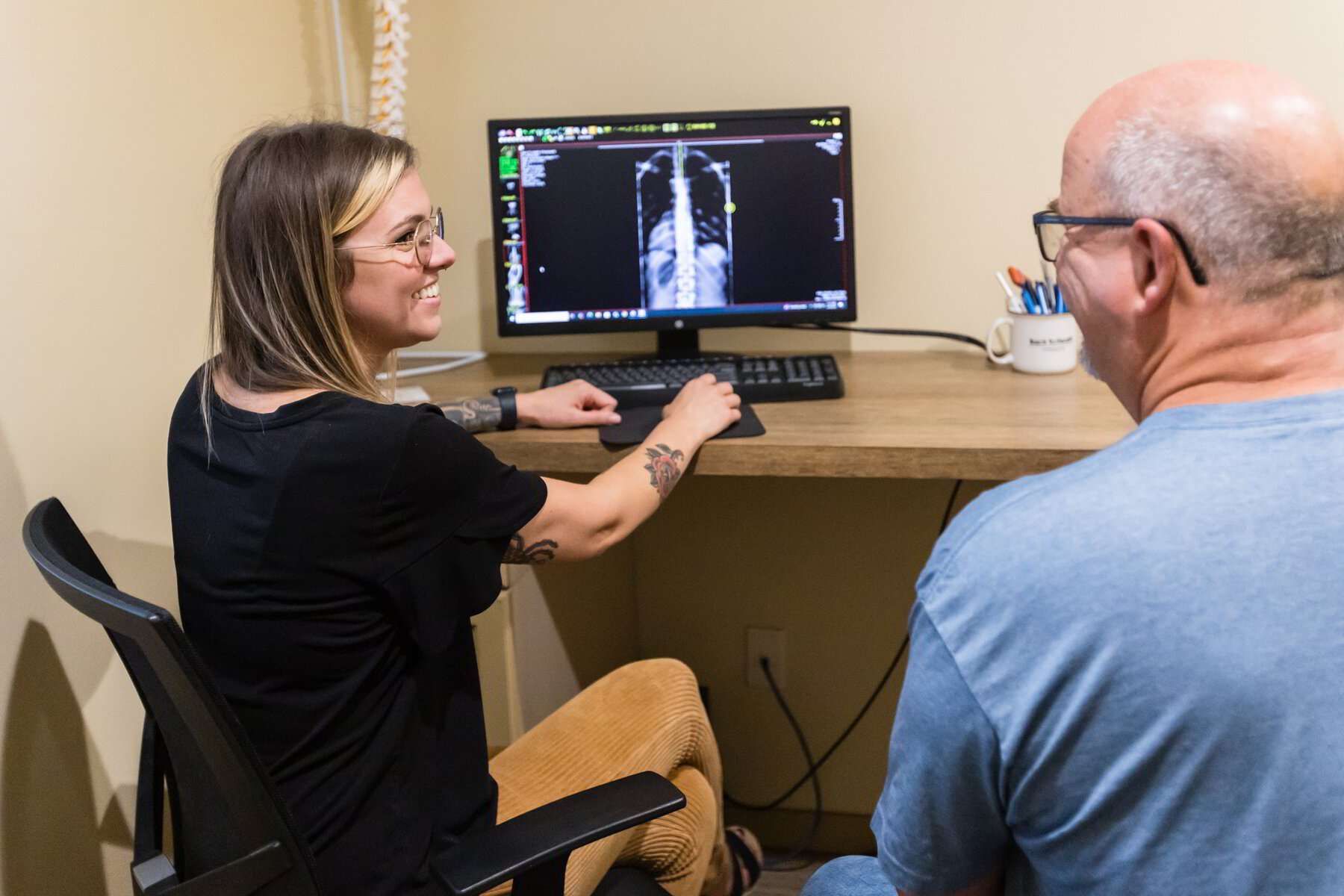
A: It depends on your specific situation. We use diagnostic imaging when it helps us provide better care—not routinely for every patient. Factors that might indicate the need for imaging include: trauma history, severe or progressive symptoms, suspected fracture, or neurological deficits. Our goal is always to provide appropriate care based on clinical findings, using imaging as a tool when it adds valuable information.
Q: What's the difference between a chiropractor and a physical therapist for this type of problem?
A: Both can be helpful, but the approaches differ. Chiropractors are spine specialists trained in detecting and correcting vertebral subluxations and joint dysfunction through specific adjustments. Physical therapists typically focus more on exercise rehabilitation and strengthening. For chest pain originating from thoracic spine or rib dysfunction, the specific adjustments chiropractors provide are often more effective at addressing the root cause. That said, we sometimes co-manage patients with physical therapists when the situation calls for it.
Your Next Steps: From Pain to Performance
If you're experiencing chest pain and you've been cleared by your medical doctor for cardiac issues, it's time to look at your spine. Your body is designed to function without pain—when something hurts, it's a signal that something needs attention.
Here's what to do next:
- Schedule a comprehensive evaluation at one of our three convenient locations. We'll assess your spine, your movement patterns, and your nervous system function to determine exactly what's causing your chest pain.
- Get a personalized care plan designed specifically for you—not a cookie-cutter protocol, but a targeted approach that addresses your unique situation.
- Commit to the process. Healing takes time, especially if you've been dealing with chronic problems. Trust the process, follow through with your care plan, and give your body the support it needs.
Ready to get started?
📅 Schedule online 24/7 at bthclinics.com/locations
📞 Or call us directly:
Zeeland/Holland: 616.546.3500
Portage: 269.345.2273
Muskegon: 231.830.1111
Bonus: Download Your Free Guide
"5 Daily Stretches to Relieve Thoracic Spine Tension and Prevent Chest Pain"
We've created a simple, illustrated guide showing you exactly how to stretch the muscles and mobilize the joints that most commonly contribute to chest pain. These are the same stretches we teach our patients—and they work.
Get your free guide: Visit bthclinics.com/thoracic-guide and enter your name and email. We'll send it right to your inbox, along with exclusive wellness tips you won't find anywhere else.
Final Thoughts: You Deserve Real Answers
Living with unexplained chest pain is exhausting—physically, mentally, and emotionally. Being told "nothing's wrong" when you know something IS wrong is invalidating and frustrating.
You deserve better. You deserve a healthcare provider who listens, who investigates thoroughly, and who has the tools to actually fix the problem.
That's what we do at Back To Health Chiropractic. We see you, we hear you, and we have solutions that work.
Your body is designed to heal. Your nervous system is designed to function optimally. Your spine is designed to support you in everything you do.
When those systems are working properly, chest pain doesn't happen. When dysfunction develops, symptoms appear—and that's your body's way of asking for help.
We're here to provide that help. Not with medication that masks symptoms. Not with surgery that should be a last resort. But with specific, scientific chiropractic care that addresses the root cause and supports your body's innate healing ability.
This is what we stand for. This is who we are. This is how we transform lives.
Ready to experience the difference? Your spine—and your chest—will thank you.
Find us on social media:
Instagram: @backtohealthchiroclinics
Facebook: Back To Health Chiropractic (location-specific pages)
TikTok: backtohealthchiroMI
YouTube: @backtohealthchiropractic9130

Dr. Tonya Westerbeke
TAGS
RECENT POSTS